 AAVE
AAVE UNI
UNI SUI
SUI NEAR
NEAR ZEC
ZEC USDT
USDT ADA
ADA BNB
BNB USDC
USDC DOGE
DOGE TRX
TRX XTZ
XTZ ATTN
ATTN DASH
DASH TAO
TAO TRUMP
TRUMP
 XRP
XRP
 ETH
ETH
 BTC
BTC
 GRAM
GRAM
 SOL
SOL
 DATA
DATA
 LINK
LINK
 WLFI
WLFI
 DEV
DEV
 ANSEM
ANSEM
 USDG
USDG
 CC
CC
 PYUSD
PYUSD
 RAIN
RAIN
 XLM
XLM
 FIGR_HELOC
 USDD
USDD
 OKB
OKB
 HYPE
HYPE
 PAXG
PAXG
 LTC
LTC
 RLUSD
RLUSD
 XMR
XMR
 USD1
USD1
 WBT
WBT
 ONDO
ONDO
 XAUT
XAUT
 AVAX
AVAX
 LEO
LEO
 USDY
USDY

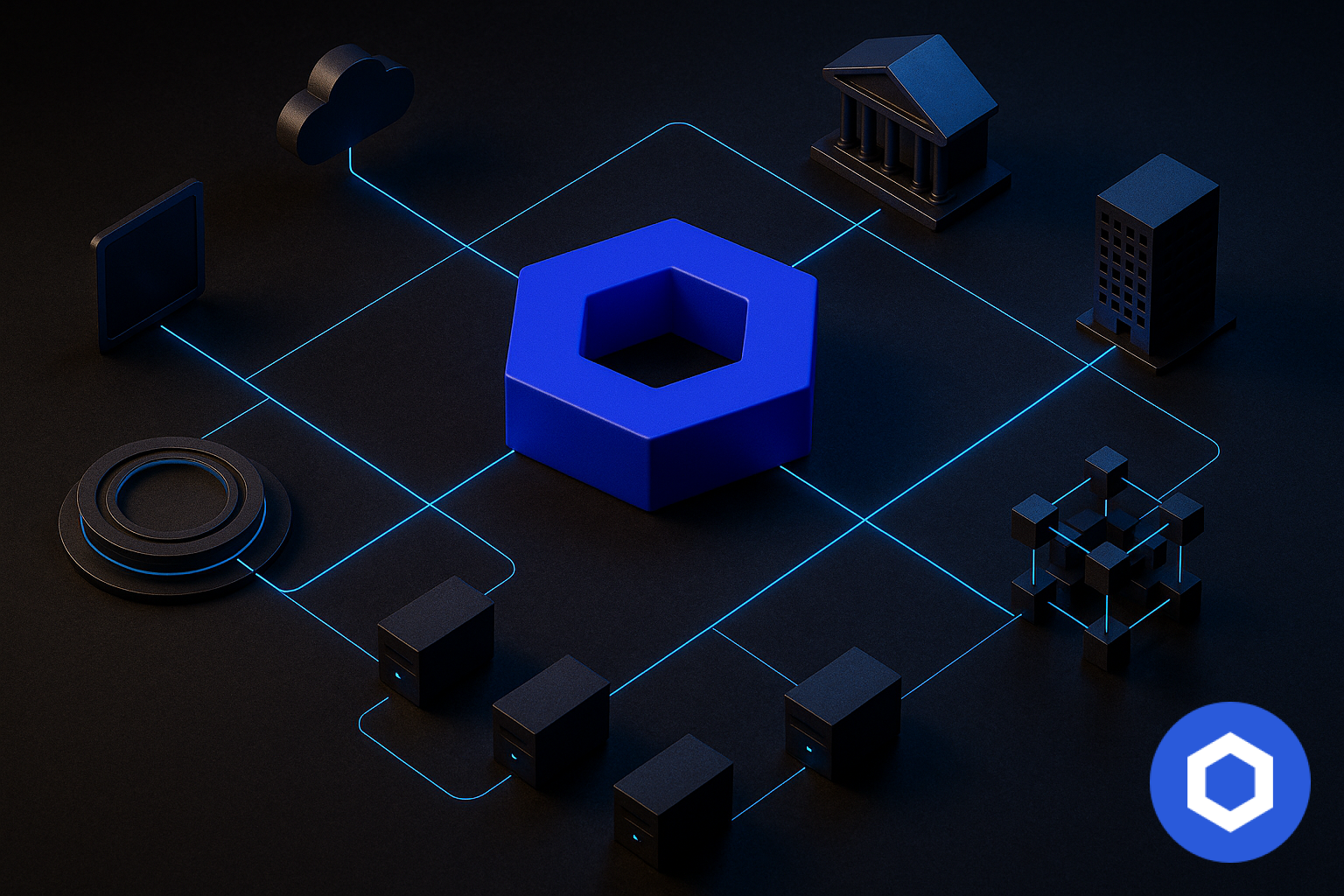
Chainlink stands at the forefront of blockchain innovation, tackling one of the most persistent challenges in the digital ledger ecosystem: the oracle problem. As decentralized applications (dApps) and smart contracts proliferate, the need for reliable, real-world data becomes paramount. Chainlink, through its decentralized oracle networks, fulfills this essential role by securely bridging on-chain smart contracts with off-chain data sources.
Understanding the Oracle Problem
The oracle problem refers to the challenge of getting external data onto a blockchain in a trustworthy manner. Blockchains, by design, are isolated systems that cannot directly access data outside their networks. This limitation inhibits their ability to interact with external stimuli, thus stifling the potential of smart contracts. Chainlink solves this by providing a decentralized network of oracles that supply tamper-proof data from the real world to the blockchain, enabling smart contracts to execute in a more dynamic and reliable manner.
The Role of the LINK Token
At the heart of Chainlink’s ecosystem is the LINK token, which serves multiple purposes. It acts as a payment currency for node operators who retrieve and format data for smart contracts. Additionally, LINK tokens are used as collateral to incentivize honest behavior among nodes, thereby securing the network. This dual functionality underscores the token’s vital role in maintaining the integrity and operability of the Chainlink network.
Tokenization and Interoperability
Chainlink’s capabilities extend beyond basic data delivery. It plays a crucial role in the burgeoning field of tokenization, where real-world assets are represented as digital tokens on the blockchain. Through its oracle networks, Chainlink facilitates accurate and timely data feeds, ensuring that tokenized assets reflect their real-world counterparts. This is vital for applications in decentralized finance (DeFi), where asset valuation and exchange rates must be precise and timely.
Moreover, Chainlink enhances interoperability across different blockchain platforms. By connecting disparate chains and enabling them to communicate, Chainlink transforms isolated networks into a cohesive ecosystem. This interoperability is crucial for the growth of the blockchain sector, where cross-chain transactions and data sharing are becoming increasingly relevant.
Strategic Risks and Opportunities
While Chainlink offers substantial benefits, it is not without risks. As a primary middleware of Web3, it faces systemic, operational, and macroeconomic challenges. The reliance on oracles introduces potential vulnerabilities, and any failure could have significant repercussions for the DeFi protocols and enterprises that depend on them. However, Chainlink’s position also presents vast opportunities for growth and innovation in the blockchain space.
Looking Ahead
As blockchain technology continues to evolve, so too will the role of Chainlink. The forthcoming years will see increased demand for decentralized oracle solutions, especially as industries like finance, supply chain, and insurance explore blockchain applications. For stakeholders, the question remains: How will Chainlink adapt to the rapid pace of technological advancement, and what innovations will it bring to the table?
In conclusion, Chainlink is not merely a data delivery system but a comprehensive solution that enhances the functionality and utility of blockchain networks. Its role in tokenization and interoperability underscores its importance in the decentralized ecosystem. As the blockchain landscape matures, Chainlink’s ability to navigate its strategic risks and seize opportunities will determine its impact and sustainability in the long term.