AAVE
AAVE UNI
UNI SUI
SUI NEAR
NEAR ZEC
ZEC USDT
USDT ADA
ADA BNB
BNB USDC
USDC DOGE
DOGE TRX
TRX XTZ
XTZ ATTN
ATTN DASH
DASH TAO
TAO TRUMP
TRUMP
 XRP
XRP
 ETH
ETH
 BTC
BTC
 GRAM
GRAM
 SOL
SOL
 DATA
DATA
 LINK
LINK
 WLFI
WLFI
 DEV
DEV
 ANSEM
ANSEM
 USDG
USDG
 CC
CC
 PYUSD
PYUSD
 RAIN
RAIN
 XLM
XLM
 FIGR_HELOC
 USDD
USDD
 OKB
OKB
 HYPE
HYPE
 PAXG
PAXG
 LTC
LTC
 RLUSD
RLUSD
 XMR
XMR
 USD1
USD1
 WBT
WBT
 ONDO
ONDO
 XAUT
XAUT
 AVAX
AVAX
 LEO
LEO
 USDY
USDY


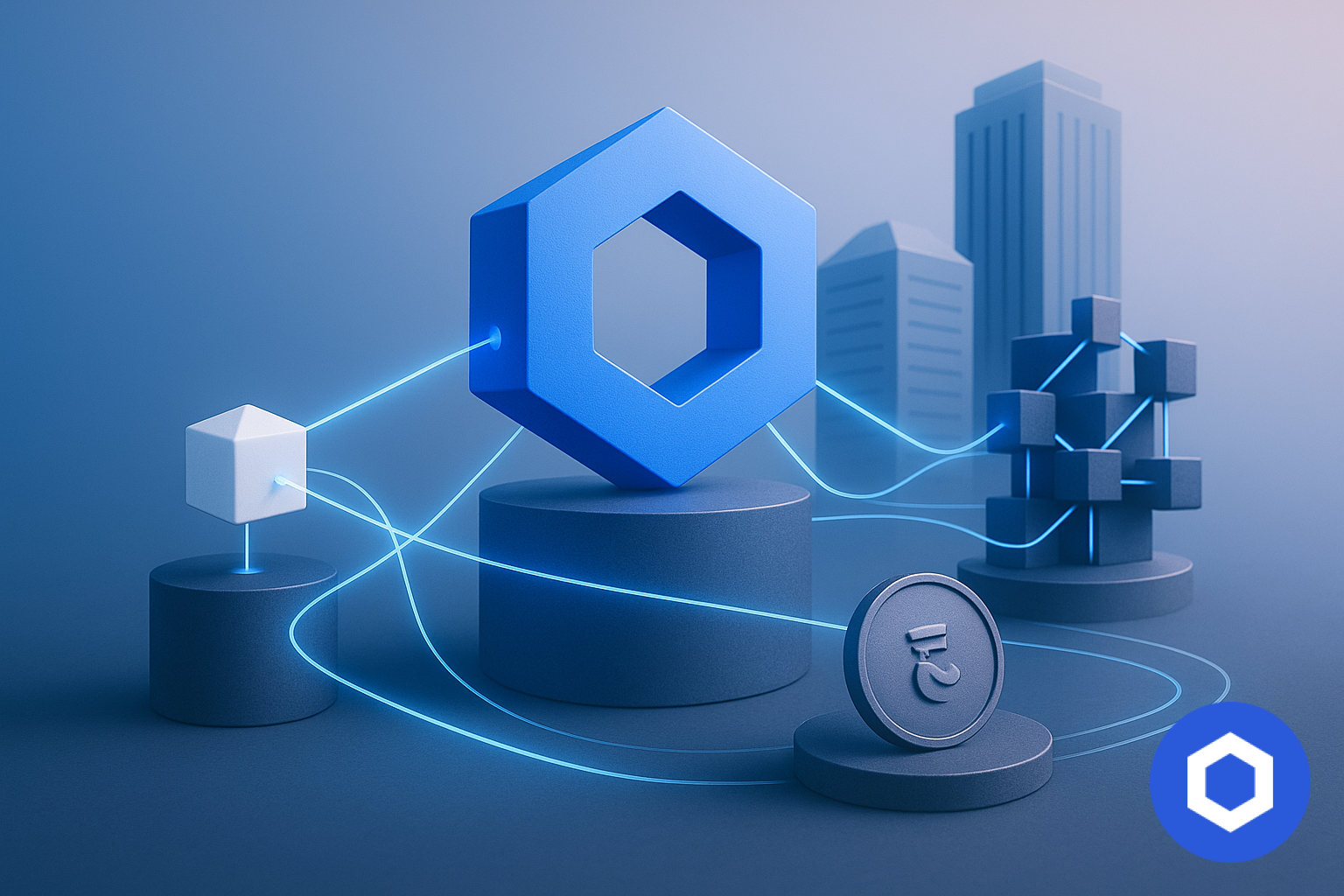
In the rapidly evolving landscape of blockchain technology, Chainlink stands out as a pivotal player, addressing the critical ‘oracle problem.’ The decentralized platform serves as a bridge between on-chain smart contracts and real-world data, ensuring that blockchain networks can interact seamlessly with external systems. While the cryptocurrency market is saturated with various projects, Chainlink’s unique role in providing secure and reliable data feeds makes it indispensable for developers, DeFi protocols, and large financial institutions.
Understanding the Oracle Problem
The oracle problem arises from blockchain’s inherent inability to access off-chain data. Smart contracts, which are self-executing agreements with the terms directly written into code, need accurate external data to function correctly. This is where Chainlink’s decentralized oracle networks come into play, providing tamper-proof, real-time data feeds that smart contracts can rely on.
Core Features of Chainlink
The Chainlink ecosystem offers a comprehensive suite of features that extend beyond basic data delivery. Its decentralized oracle networks are designed to achieve interoperability across multiple blockchain environments. This cross-chain functionality ensures that smart contracts can access a wide array of data sources and services securely and efficiently. Furthermore, Chainlink’s decentralized nature enhances security by distributing data retrieval and aggregation among numerous independent nodes, reducing the risk of single points of failure.
Another key aspect is Chainlink’s support for tokenization. By enabling the tokenization of real-world assets, Chainlink facilitates the integration of traditional financial instruments into the blockchain ecosystem. This capability opens up new avenues for creating decentralized finance products and services that can operate with the efficiency and security of blockchain technology.
Market Impact and Ecosystem Growth
Chainlink’s impact on the blockchain and DeFi space cannot be overstated. It has become the industry-standard decentralized infrastructure layer, connecting hundreds of blockchains with real-world applications. This expansive growth is evidenced by thousands of integrations across both public Web3 protocols and private enterprise solutions.
The LINK token, integral to Chainlink’s operation, serves multiple roles: it acts as a payment currency for services within the network, a collateral mechanism ensuring smart contract reliability, and a tool for maintaining network security. As blockchain technology increasingly permeates various sectors, Chainlink’s value proposition continues to strengthen, making it a crucial element for any blockchain-based application requiring real-world data.
Challenges and Future Outlook
Despite its successes, Chainlink faces several challenges. Its position as a primary middleware of Web3 exposes it to systemic, operational, and macroeconomic risks. As the ecosystem grows, scalability and security remain paramount concerns. Additionally, maintaining decentralization while ensuring data accuracy and reliability presents an ongoing technical challenge.
Looking forward, Chainlink’s roadmap includes further enhancing its scalable infrastructure and expanding its suite of oracle services to support more complex decentralized applications. By addressing these challenges, Chainlink aims to solidify its role as a foundational element of the blockchain ecosystem, continuing to facilitate innovation and interoperability across diverse platforms.
In conclusion, as blockchain technology evolves, the ability to connect these networks to real-world data sources securely and efficiently will remain a vital component. Chainlink, with its robust oracle solutions and vast ecosystem integrations, is well-positioned to continue driving this essential connection, ensuring that smart contracts can operate with the trust and reliability required for widespread adoption.