AAVE
 PAXG
 UNI
 USDE
 DAI
 LTC
 SHIB
 AVAX
 SUI
 OKB
 CRO
 CC
 LEO
 XLM
 ONDO
 NEAR
 WBT

 XRP
 ETH
 TRUMP
 BTC
 SOL
 GRAM
 DATA
 LINK
 TAO
 DASH
 XTZ
 ATTN
 WLFI
 DEV
 TRX
 ANSEM
 BNB
 USDT
 ADA
 DOGE
 USDC
 ZEC
 USDG
 PYUSD
 HYPE
 XMR
 FIGR_HELOC
 RAIN
 RLUSD
 USD1
 XAUT
 USDD
 USDY

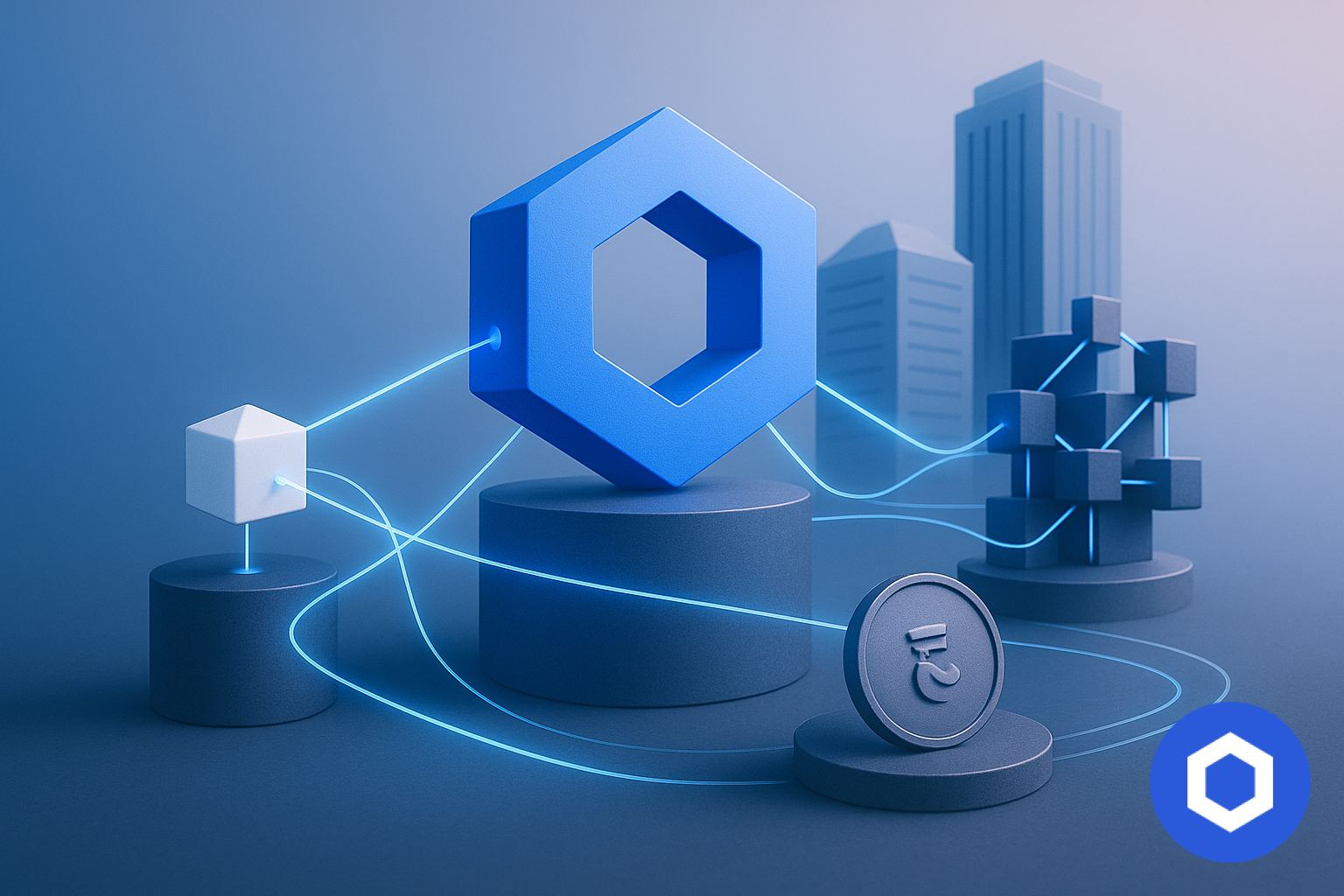
In the rapidly evolving world of blockchain technology, Chainlink stands as a beacon of innovation, bridging the crucial gap between decentralized networks and real-world data. As a decentralized oracle network, Chainlink provides a secure, reliable, and tamper-proof way for smart contracts to interact with off-chain data sources, solving what is known as the ‘oracle problem’.
Understanding the Oracle Problem
Blockchains, by design, are isolated from external systems. This isolation ensures security, but it also limits the blockchain’s ability to access external data. While smart contracts are inherently powerful, their true potential is unlocked when they can react to real-world events, such as price changes, weather conditions, or sports scores. Chainlink addresses this limitation by acting as a bridge, enabling smart contracts to securely interact with real-world data.
The Chainlink Ecosystem
The Chainlink ecosystem has evolved into a comprehensive suite of data, computing, and interoperability services. It integrates with hundreds of blockchains, facilitating thousands of real-world applications. By providing data feeds, Chainlink plays a critical role in decentralized finance (DeFi) protocols, ensuring that smart contracts execute based on accurate and reliable data.
Chainlink’s ability to connect decentralized applications with external APIs opens up myriad possibilities. For instance, insurance contracts can automatically pay out claims based on weather data, and decentralized exchanges can fetch real-time price feeds to execute trades.
Tokenization and Chainlink
One of the key areas where Chainlink is making significant strides is in tokenization. Tokenization involves representing real-world assets, such as stocks or real estate, as digital tokens on a blockchain. This process not only enhances liquidity but also democratizes access to traditional asset classes.
Recent developments in the market, such as Robinhood’s backing of stock tokenization and Avalanche’s role in settling tokenized stocks, highlight the growing importance of this trend. Chainlink, with its robust oracle network, is poised to play a pivotal role in ensuring the accuracy and reliability of data that underpins these tokenized assets.
Chainlink’s Competitive Edge
In a landscape where trust and reliability are paramount, Chainlink’s decentralized architecture ensures data integrity and security. Unlike centralized oracles, which are vulnerable to single points of failure, Chainlink’s network of independent data providers mitigates the risk of data manipulation.
Furthermore, the native utility token, LINK, serves as the backbone of the Chainlink network. It is used as a payment currency for data providers and as collateral to ensure the reliability of data feeds. This token mechanism not only incentivizes data accuracy but also enhances network security.
Looking Ahead: The Future of Chainlink
As blockchain technology continues to mature, the demand for reliable oracle solutions will only increase. Chainlink’s position as an industry-standard infrastructure layer positions it well to capitalize on this growth. However, its role as the primary middleware of Web3 also exposes it to unique risks, including systemic and macroeconomic challenges.
Developers and enterprises looking to leverage blockchain technology must weigh these risks against the benefits of a decentralized oracle network. As the ecosystem evolves, Chainlink’s ability to adapt and innovate will be crucial in maintaining its leadership position.
In conclusion, Chainlink’s commitment to providing a secure, reliable, and comprehensive oracle solution makes it a cornerstone of the decentralized finance landscape. Its role in enabling smart contracts to react to real-world events not only enhances the functionality of blockchain applications but also paves the way for the future of decentralized connectivity.