AAVE
 UNI
 SHIB
 AVAX
 SUI
 OKB
 XLM
 NEAR
 WBT
 ZEC
 XMR
 USDT
 HYPE
 ADA
 BNB
 USDC
 DOGE

 XRP
 ETH
 TRUMP
 BTC
 SOL
 GRAM
 DATA
 LINK
 TAO
 DASH
 XTZ
 ATTN
 DEV
 WLFI
 TRX
 ANSEM
 USDG
 PYUSD
 CC
 PAXG
 RAIN
 FIGR_HELOC
 LTC
 ONDO
 RLUSD
 USD1
 XAUT
 USDD
 USDY
 LEO

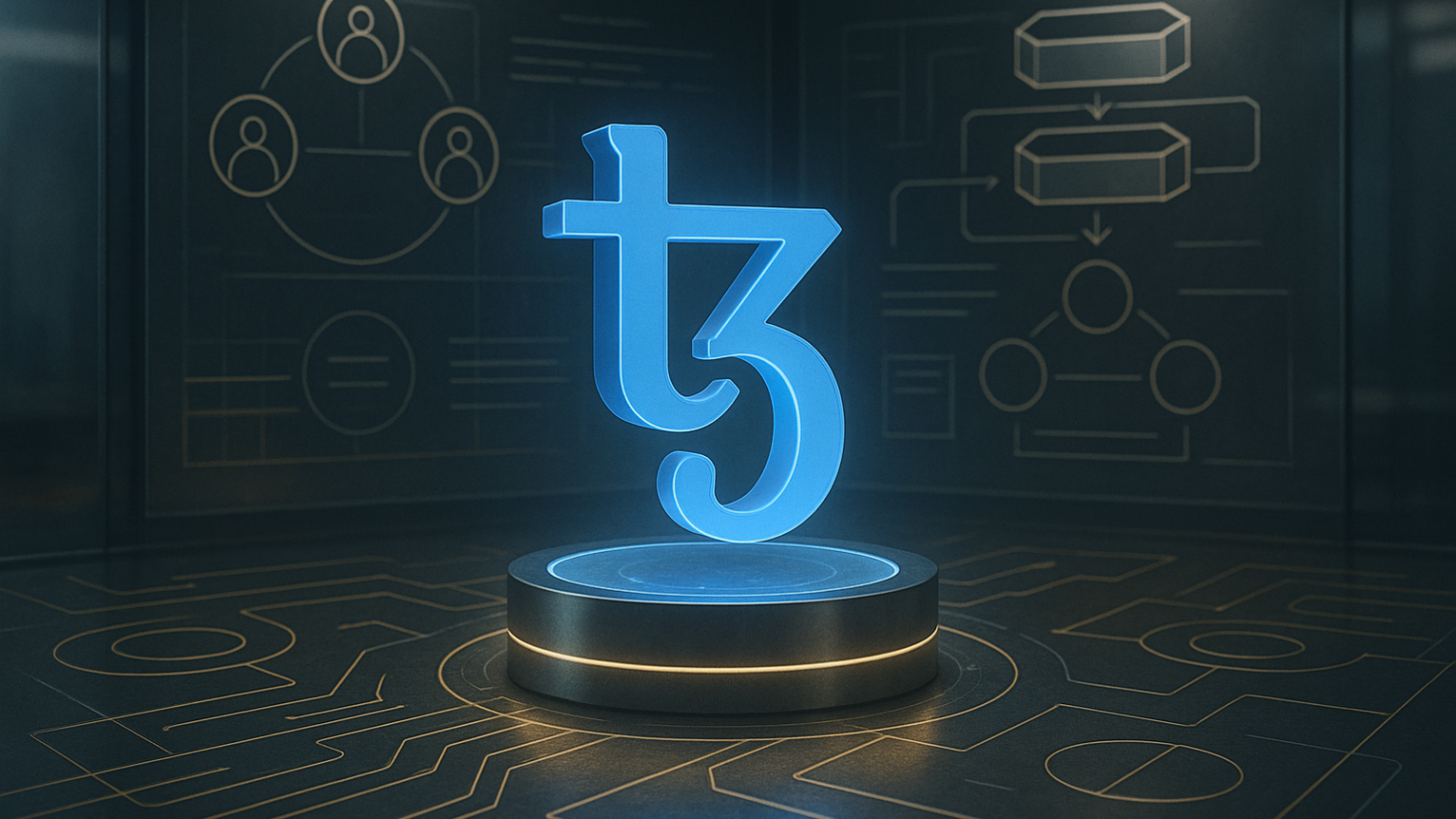
In the ever-evolving world of blockchain technology, Tezos stands out as a beacon of innovation and resilience. Launched in 2018, Tezos is a high-performing blockchain that emphasizes security, on-chain governance, and decentralization. With its unique Liquid Proof-of-Stake (LPoS) consensus mechanism, Tezos has carved a niche for itself, offering stakeholders unparalleled opportunities for participation and rewards.
The Power of Liquid Proof-of-Stake
Tezos’ Liquid Proof-of-Stake system is a groundbreaking approach to blockchain consensus mechanisms. Unlike traditional Proof-of-Work systems, which require significant computational power and energy consumption, LPoS allows any stakeholder to participate in the network. This can be done either directly or through delegation, making the system more inclusive and energy-efficient.
In LPoS, stakeholders can ‘bake’ or validate blocks, securing the network in exchange for rewards. This democratization of network security not only increases decentralization but also aligns incentives across the community. As of today, Tezos has managed to maintain a stable and secure network, thanks to its robust baking ecosystem.
Governance and Smart Contracts
Tezos is renowned for its on-chain governance model, which allows continuous upgrades and evolution without the need for hard forks. Stakeholders can propose, vote on, and implement changes directly on the blockchain, ensuring that the platform adapts to changing needs and technological advancements. This governance model fosters a community-driven approach, reducing the risks of centralization and power consolidation.
Moreover, Tezos supports smart contracts, which are crucial for building decentralized applications (dApps). The platform’s focus on formal verification ensures that smart contracts are secure and reliable, minimizing vulnerabilities and potential exploits. This feature is particularly appealing in a world where security breaches and smart contract failures are all too common.
Navigating Challenges and Opportunities
Despite its technical strengths, Tezos has faced its share of challenges. The project was initially marred by legal and regulatory issues, with disputes involving its founders, Arthur and Kathleen Breitman. These challenges, coupled with governance infighting, have occasionally overshadowed the platform’s technological advancements. However, these hurdles have also catalyzed important governance reforms and strengthened community resilience.
Tezos’ focus on non-fungible tokens (NFTs) and decentralized finance (DeFi) presents significant opportunities. The platform’s energy-efficient design is particularly attractive to NFT creators concerned about environmental impact. Additionally, Tezos’ scalability solutions, such as Layer 2 rollups, position it well to capture a larger share of the DeFi market.
Balancing Risks and Rewards
As with any investment in the cryptocurrency space, there are inherent risks associated with Tezos. Technological competition is fierce, and the blockchain landscape is continually shifting. However, Tezos’ commitment to security, community governance, and sustainability offers investors a compelling value proposition.
In conclusion, Tezos has established itself as a reliable and innovative player in the blockchain arena. Its Liquid Proof-of-Stake mechanism, coupled with strong governance and smart contract capabilities, provides a solid foundation for future growth. While challenges remain, the opportunities for Tezos are significant, making it a blockchain worth watching as it continues to evolve in the dynamic crypto landscape.