AdPrPromoteAdvertise With CryptoLiveLeakSponsored#1M69M6954Solana#2AAVEAAVE50Aave#3UNIUNI50Uniswap#4SUISUI50Sui#5NEARNEAR50NEAR Protocol#6ZECZEC50Zcash#7USDTUSDT50Tether#8ADAADA50Cardano#9BNBBNB50BNB#10USDCUSDC50USDC#11DOGEDOGE50Dogecoin#12TRXTRX50TRON#13XTZXTZ50Tezos#14ATTNATTN50Solana#15DASHDASH50Dash#16TAOTAO50Bittensor#17TRUMPTRUMP50Solana
🔥
Go Live
Market Pulse
Platform signalMarkets, media, and creator operations in one network.

Track assets, publish original coverage, and turn verified attention into measurable participation.

Explore the network
CryptoLiveLeak account

Join the signal network.

One account connects memberships, creator tools, watchlists, wallets, and integrations.

Welcome back

Create an account

Blog

Monero: The Gold Standard for Financial Privacy and Censorship Resistance

CryptoLiveLeak September 19, 2026 3 views

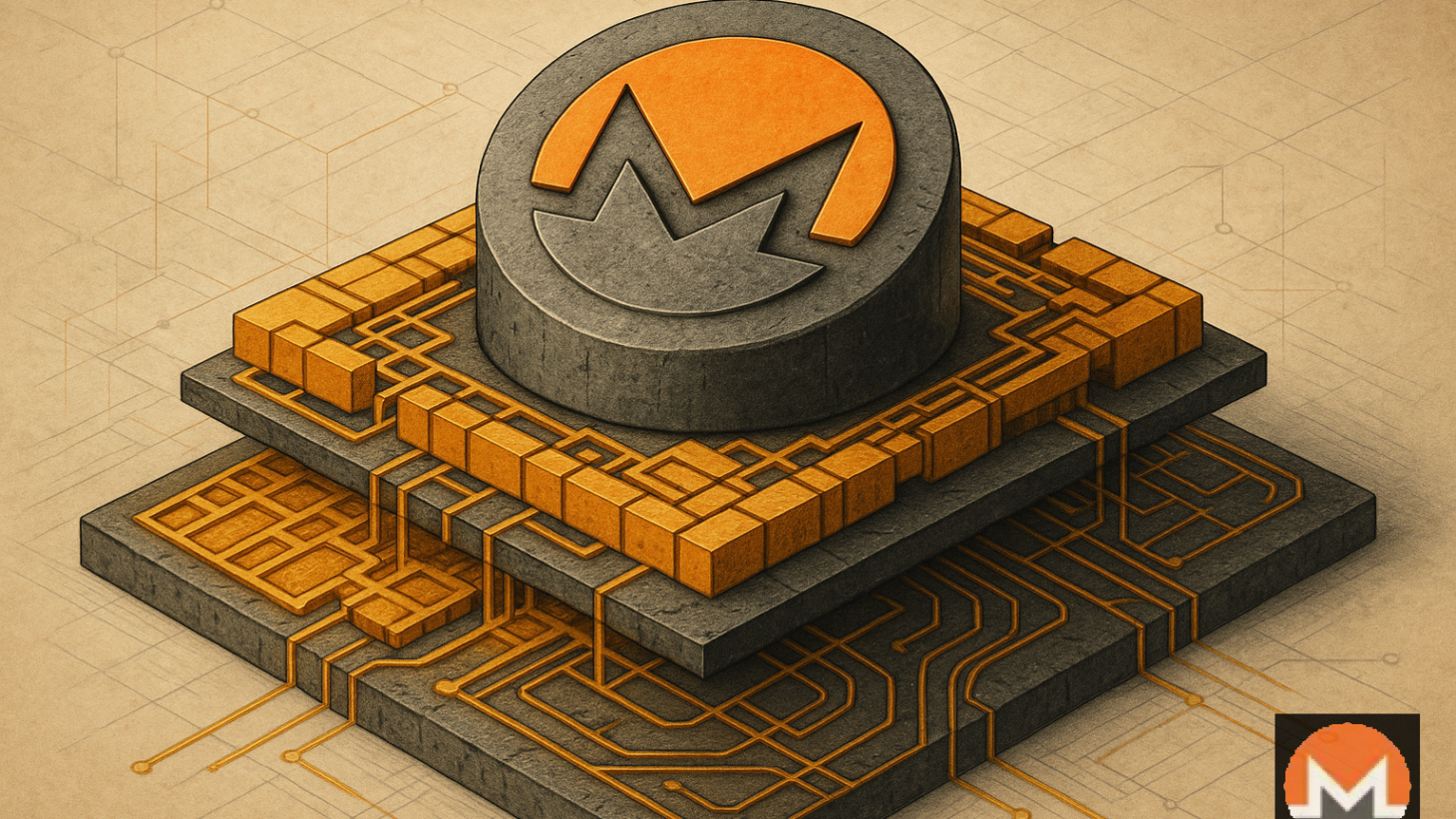
In an era marked by escalating financial surveillance and data breaches, Monero (XMR) emerges as the gold standard for absolute financial privacy and censorship resistance. Its commitment to mandatory, protocol-level obfuscation makes it a unique player in the cryptocurrency landscape, ensuring transaction senders, recipients, and amounts remain hidden by default. This article examines how Monero’s innovative technology positions it as the ultimate privacy coin and explores the strategic implications for financial privacy advocates and regulatory bodies.

Monero’s Advanced Obfuscation Technology

Monero’s core strength lies in its sophisticated cryptographic techniques designed to ensure untraceable transactions. Unlike transparent blockchains such as Bitcoin, where transaction details are publicly accessible, Monero employs advanced obfuscation cryptography, including Ring Signatures, Stealth Addresses, and Ring Confidential Transactions (RingCT). These technologies work in tandem to obscure transaction details, making it virtually impossible for third parties to trace the flow of funds.

Ring Signatures allow a group of possible signers to authorize a transaction, thereby hiding the actual sender. Stealth Addresses generate unique addresses for each transaction, ensuring that recipient information remains confidential. Ring Confidential Transactions (RingCT) further enhance privacy by hiding transaction amounts, maintaining confidentiality while preserving network integrity.

Maintaining Mining Decentralization

Monero’s commitment to privacy extends to its mining protocol. The network employs RandomX, an ASIC-resistant proof-of-work algorithm that promotes decentralization by making it difficult for specialized industrial hardware to dominate the network. By favoring CPU mining, Monero ensures that a broader range of participants can contribute to the network’s security, reinforcing its censorship-resistant nature.

The Role of the Monero Research Lab

Continuous innovation is a hallmark of Monero’s development. The Monero Research Lab, a highly skilled research group, is pivotal in advancing zero-knowledge protocol updates. Their work ensures that Monero remains at the forefront of privacy technology, continuously integrating improvements like the Full-Chain Membership Proof (FCMP++), which enhances efficiency and privacy further.

Regulatory Challenges and Market Implications

Despite its technological prowess, Monero faces significant regulatory challenges due to its robust privacy features. Global regulatory pushback and anti-money laundering compliance pressures have led to its delisting from major centralized exchanges, fragmenting its trading liquidity. However, these challenges also highlight Monero’s importance in preserving financial privacy in a world increasingly leaning towards surveillance.

The recent CoinDesk article on the unconstitutional nature of predictive policing underscores the urgent need for privacy-focused financial systems like Monero. As governments leverage financial data for political profiling, Monero’s role as a safeguard against such practices becomes even more critical.

Looking Ahead

As Monero continues to evolve, the focus will remain on strengthening its privacy features and enhancing network security. The community’s grassroots nature and the active involvement of the Monero Research Lab will play a crucial role in navigating regulatory landscapes while promoting robust financial privacy.

For financial privacy advocates and blockchain researchers, Monero represents a beacon of hope in the fight against financial surveillance. As regulatory pressures mount, the cryptocurrency’s unwavering commitment to privacy makes it a valuable asset for those seeking untraceable transactions and censorship resistance. Moving forward, stakeholders should closely monitor developments in Monero’s protocol updates and regulatory responses to gauge its impact on the broader cryptocurrency landscape.


Leave a Reply

Blog

Monero: The Gold Standard for Financial Privacy and Censorship Resistance

CryptoLiveLeak August 20, 2026 38 views

In an era where financial transactions are increasingly scrutinized, Monero (XMR) stands out as a beacon of privacy and censorship resistance. Unlike Bitcoin and other transparent blockchains, Monero enforces privacy through mandatory protocol-level obfuscation, ensuring that transaction senders, recipients, and amounts remain hidden by default. This positions Monero not only as a privacy-centric cryptocurrency but as the gold standard for absolute financial privacy.

Unparalleled Privacy through Advanced Cryptography

Monero’s privacy features are built on a foundation of advanced cryptographic techniques. The network employs Ring Signatures, Stealth Addresses, and Ring Confidential Transactions (RingCT) to achieve unparalleled privacy. Ring Signatures blend a user’s transaction with others, making it impossible to trace the source. Stealth Addresses ensure that each transaction is linked to a one-time address, preventing recipient identification. RingCT, meanwhile, conceals the transaction amount, ensuring that no single Monero coin can be distinguished from another.

Fungibility and Decentralization

These features make Monero fully fungible, meaning every unit is equivalent and interchangeable. Unlike transparent blockchains where transaction history can stigmatize a coin, Monero’s obfuscation ensures that all coins have no distinguishable history. This level of fungibility is critical for a digital currency aiming to serve as a reliable medium of exchange.

Moreover, Monero employs the RandomX Proof-of-Work consensus algorithm, designed to be ASIC-resistant. This ensures that mining remains decentralized and accessible to individuals with standard consumer hardware, preventing the monopoly of large mining operations.

Market Context and Comparisons

While the broader cryptocurrency market, as evidenced by recent movements in assets like Coinbase and Ripple, focuses on regulatory clarity and mainstream adoption, Monero’s distinction lies in its unwavering commitment to privacy. The ongoing discussion around the Clarity Act and the CFTC’s regulatory posture (as noted in sources) highlight the tension between transparency and privacy in the crypto space.

Unlike permissioned systems used by banks for tokenized deposits, which prioritize compliance over privacy, Monero’s open network ensures that privacy is absolute and non-negotiable. This starkly contrasts with other cryptocurrencies that sacrifice privacy for regulatory acceptance.

Community and Development

Monero’s development is driven by a dedicated grassroots community and the Monero Research Lab, which continuously pushes for zero-knowledge protocol updates. This includes the integration of features like FCMP++ (Full-Chain Membership Proof), further enhancing the network’s robustness.

However, Monero’s anonymity features have not come without challenges. The network faces significant regulatory pushback, with many centralized exchanges delisting XMR due to anti-money laundering compliance pressures. This has led to a fragmented trading landscape, posing liquidity challenges for traders.

Balancing Risks and Opportunities

While regulatory scrutiny poses a risk, Monero’s commitment to privacy offers unique opportunities in an era of increasing surveillance. For financial privacy advocates and decentralized network miners, Monero represents a critical tool for protecting transactional privacy.

In conclusion, as the debate around privacy and transparency in cryptocurrencies continues, Monero remains steadfast in its mission to provide absolute financial privacy. With its advanced cryptographic techniques and commitment to decentralization, Monero sets itself apart as the gold standard in a landscape where privacy is increasingly under threat.

Leave a Reply

Blog

Monero: The Gold Standard for Financial Privacy and Censorship Resistance

CryptoLiveLeak August 6, 2026 38 views

In the evolving landscape of digital currencies, Monero (XMR) stands out as the gold standard for financial privacy and censorship resistance. This Layer-1 blockchain protocol is engineered to provide untraceable digital cash, a feat achieved through its mandatory, protocol-level obfuscation technology. By default, Monero hides transaction senders, recipients, and amounts, making it a beacon of privacy in a world where public ledger surveillance is on the rise.

Monero’s Cryptographic Innovation

Monero employs a suite of advanced cryptographic techniques to ensure absolute financial privacy. Among these are Ring Signatures, Stealth Addresses, and Ring Confidential Transactions (RingCT). Ring Signatures mix an individual’s transaction with a group of others, obfuscating the actual sender. Stealth Addresses generate a unique, one-time address for each transaction, ensuring recipient privacy. Meanwhile, RingCT hides transaction amounts, completing the trifecta of anonymity.

Ring Signatures: Cloaking the Sender

Ring Signatures provide plausible deniability for the sender by allowing their transaction to be indistinguishable from others in the same group. This not only ensures privacy but also enhances the fungibility of Monero. Each XMR coin is indistinct from another, preventing ‘tainted’ coins from being tracked across the network.

Stealth Addresses: Securing the Recipient

Monero’s use of Stealth Addresses ensures that funds are sent to a one-time address, making it impossible for outsiders to link transactions to the recipient’s public address. This feature is pivotal in maintaining the privacy and security of users in a decentralized environment.

Ring Confidential Transactions: Concealing the Amount

RingCT conceals the amount being transacted, adding another layer of privacy. By hiding the transaction value, Monero ensures that financial interactions remain confidential, a critical component for users seeking discretion in their digital dealings.

ASIC-Resistance and Decentralization

Beyond privacy, Monero is also noteworthy for its ASIC-resistant properties. The network employs the RandomX Proof-of-Work consensus algorithm, which is designed to be efficient on standard consumer hardware. This approach prevents the centralization of mining power, often seen in networks reliant on specialized mining equipment.

By democratizing the mining process, Monero maintains a decentralized network, which is essential for its censorship resistance. This decentralization ensures that no single entity can exert control over the network, aligning with the ethos of a truly decentralized digital currency.

Market Context and Challenges

While Monero’s privacy features make it a favorite among advocates of financial confidentiality, they also attract regulatory scrutiny. Governments around the world have expressed concerns about the use of privacy coins like Monero in illicit activities. As a result, Monero has faced delistings from major centralized exchanges, impacting its liquidity.

Despite these challenges, Monero’s community remains robust and committed to its core principles. The Monero Research Lab continues to innovate, ensuring that the network adapts to emerging threats and regulatory pressures. This community-driven approach underscores Monero’s resilience in an ever-changing regulatory landscape.

The Future of Financial Privacy

As public ledger surveillance intensifies, the need for privacy-centric solutions like Monero is more pressing than ever. The network’s ability to provide untraceable transactions sets it apart from other cryptocurrencies, positioning it as a vital tool for those prioritizing financial privacy.

If Monero can navigate the regulatory challenges and maintain its network’s decentralization, it will continue to set the standard for privacy and censorship resistance in the digital currency space. However, increased regulatory pressure could pose significant hurdles, testing the resilience of its community and the robustness of its technology.

Leave a Reply

Blog

Monero: The Gold Standard for Financial Privacy and Censorship Resistance

CryptoLiveLeak August 4, 2026 19 views

In a digital era where privacy is increasingly compromised, Monero (XMR) stands as the beacon of financial confidentiality. As a decentralized, open-source Layer-1 privacy coin, Monero is engineered to function as completely anonymous and untraceable digital cash. Unlike transparent blockchains like Bitcoin, Monero enforces absolute privacy by default, employing advanced obfuscation cryptography such as Ring Signatures, Stealth Addresses, and Ring Confidential Transactions (RingCT).

Monero’s Protocol-Level Obfuscation

Monero employs a unique set of cryptographic tools that ensure complete anonymity. Ring Signatures obscure the sender’s identity by blending it with a group of user signatures, making it computationally infeasible to determine the actual signer. Stealth Addresses further enhance privacy by ensuring that each transaction is sent to a one-time address, thus hiding the recipient’s identity. Meanwhile, RingCT conceals transaction amounts, creating a trifecta of obfuscation that guarantees complete privacy.

Why Monero is Unparalleled

What sets Monero apart from other cryptocurrencies is its commitment to mandatory privacy. While other coins offer optional privacy features, Monero enforces it at the protocol level, ensuring that all transactions are confidential by default. This is crucial in preserving the fungibility of the asset; no Monero coin can be tainted by its transaction history, a feature not inherently guaranteed by transparent blockchains like Bitcoin.

Furthermore, Monero maintains an ASIC-resistant environment through its RandomX Proof-of-Work algorithm. This ensures a decentralization of mining power, preventing the consolidation of mining capabilities in the hands of a few entities. This resistance not only supports decentralization but also aligns with Monero’s ethos of providing a truly democratic and accessible currency.

Market Backdrop

As the financial world explores tokenization and stablecoins, Monero remains steadfast in its mission to provide unassailable privacy. While the likes of USDC and others navigate regulatory scrutiny and seek mass adoption through partnerships with giants like Samsung and Wells Fargo, Monero focuses on refining its privacy protocols and resisting censorship. The lack of major corporate backing does not hinder Monero; instead, it strengthens its position as the sovereign guardian of privacy, free from corporate surveillance and influence.

Despite regulatory pressures and delistings from centralized exchanges, Monero’s community remains resilient. The Monero Research Lab continuously advances zero-knowledge protocols, ensuring the coin remains at the cutting edge of privacy technology.

The Risks and Opportunities

Monero’s commitment to anonymity has attracted regulatory scrutiny, with concerns over its potential misuse for illicit activities. This has led to its exclusion from some major exchanges, fragmenting liquidity and posing challenges to its mainstream adoption. However, these challenges also underscore a critical opportunity: the growing demand for financial privacy. As public awareness of data surveillance rises, so does the appeal of privacy-centric solutions like Monero.

The opportunity for Monero lies in its ability to cater to an audience that values privacy above all else. This niche, while potentially limited in scale compared to mainstream financial networks, is increasingly vital in an age where every transaction is monitored and data is the new oil.

In conclusion, Monero’s unwavering focus on privacy and decentralization positions it as the gold standard for financial confidentiality. While regulatory challenges persist, Monero’s robust community and innovative cryptographic solutions continue to drive its evolution. As the digital world grapples with privacy concerns, Monero remains a pivotal player, offering a secure, anonymous alternative to traditional financial systems.

Leave a Reply