 AAVE
AAVE UNI
UNI AVAX
AVAX SUI
SUI XLM
XLM NEAR
NEAR ZEC
ZEC XMR
XMR USDT
USDT ADA
ADA BNB
BNB USDC
USDC DOGE
DOGE TRX
TRX XTZ
XTZ ATTN
ATTN DASH
DASH
 XRP
XRP
 ETH
ETH
 TRUMP
TRUMP
 BTC
BTC
 GRAM
GRAM
 SOL
SOL
 DATA
DATA
 LINK
LINK
 TAO
TAO
 DEV
DEV
 WLFI
WLFI
 ANSEM
ANSEM
 USDG
USDG
 PYUSD
PYUSD
 CC
CC
 RAIN
RAIN
 FIGR_HELOC
 PAXG
PAXG
 HYPE
HYPE
 USDD
USDD
 OKB
OKB
 LTC
LTC
 ONDO
ONDO
 RLUSD
RLUSD
 USD1
USD1
 XAUT
XAUT
 WBT
WBT
 LEO
LEO
 USDY
USDY

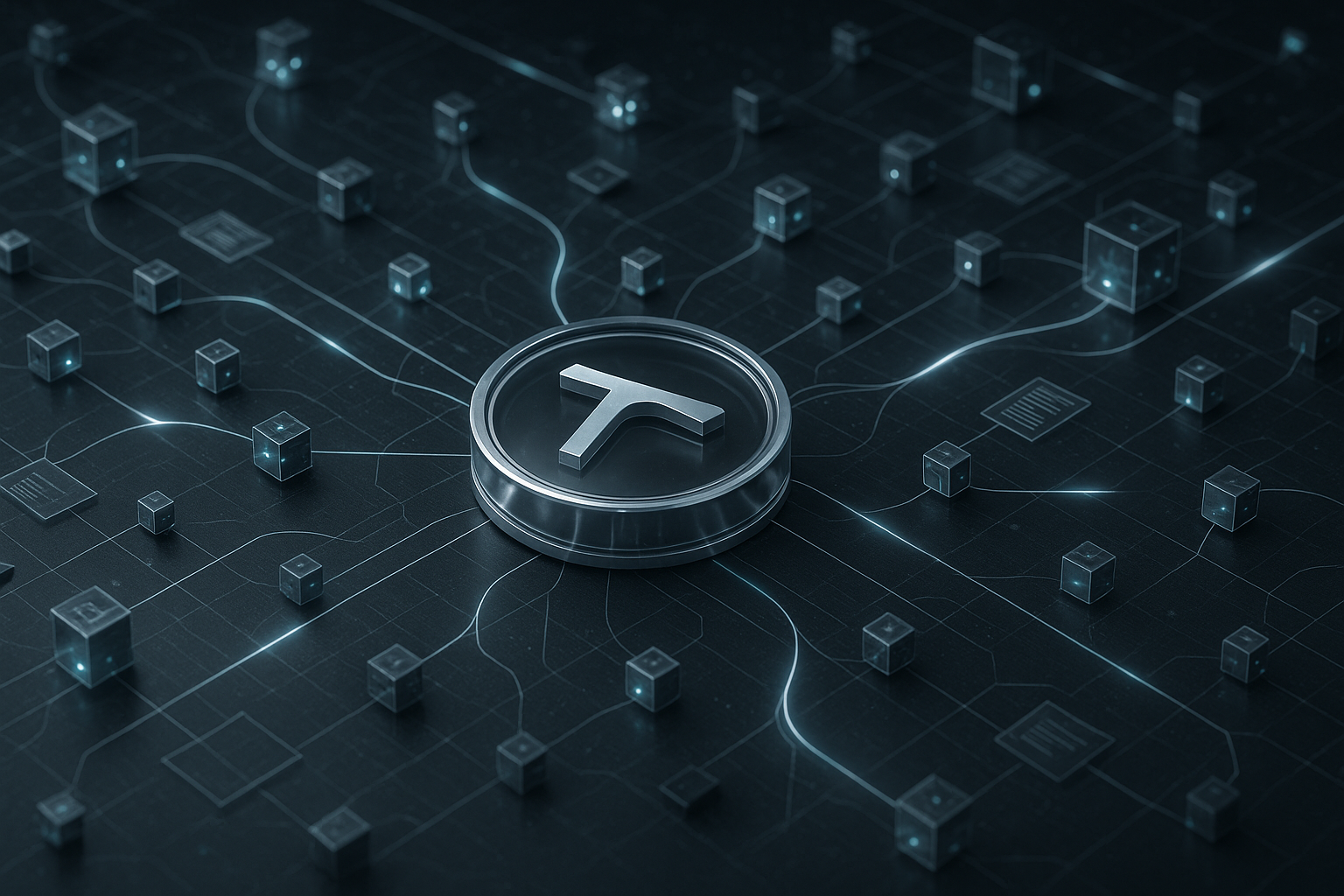
In the rapidly evolving landscape of artificial intelligence (AI), Bittensor stands out as a beacon of decentralization, aiming to dismantle the monopolistic hold tech giants have over AI development. By utilizing blockchain technology, Bittensor creates an open-source protocol where machine learning models can collaborate and be rewarded for their contributions in TAO tokens. This innovative approach not only democratizes AI but also fosters a marketplace where producers and consumers of AI can interact in a trustless, open environment.
Decentralized AI: A New Paradigm
Bittensor’s decentralized AI model offers a stark contrast to the centralized systems of today. Traditional AI development often occurs within closed, corporate-controlled environments, limiting access and innovation. Bittensor, however, leverages blockchain to connect machine learning models into a global, collaborative neural network. This network allows for the exchange of information and collective learning, effectively creating a marketplace for AI capabilities.
Economic Engine: The Role of TAO
The TAO token plays a crucial role in Bittensor’s ecosystem. It serves as the primary economic engine, rewarding nodes that provide valuable information to the network. These tokens are not only incentives but also act as a mechanism for access, staking, and governance. As nodes contribute more to the network, they earn more TAO, encouraging continuous improvement and competition. This design aligns incentives with the network’s growth and robustness, ensuring that only the most valuable contributions are rewarded.
Technological Infrastructure
Bittensor operates with two types of nodes: servers and validators. Servers provide the computational power needed for AI operations, while validators assess the value of their responses. This dual-node system ensures that the network remains efficient and fair, with low-value nodes being de-registered over time. This dynamic encourages a self-regulating ecosystem where only the best nodes thrive, contributing to the network’s overall integrity and performance.
Market Context and Comparisons
While Bittensor is pioneering a decentralized approach, recent developments in AI compute stocks, as seen in companies like Hut 8 and IREN, highlight the increasing demand for data center capacity. These traditional models, however, contrast with Bittensor’s decentralized marketplace, which could potentially offer more scalable and efficient solutions. The current market’s reliance on centralized infrastructure is a risk that Bittensor aims to mitigate by leveraging the power of blockchain.
Challenges and Risks
Despite its promising framework, Bittensor faces challenges, including potential centralization of validator power and regulatory uncertainties. The high token emission rate could also lead to dilution, affecting the long-term value of TAO. Moreover, as AI and blockchain technologies continue to evolve, Bittensor must navigate the complexities of regulatory landscapes, particularly concerning classifications by agencies like the SEC.
Future Outlook
Looking ahead, Bittensor’s vision of a decentralized AI marketplace offers a compelling alternative to the current centralized models. By promoting open access and ownership, it could redefine how AI is developed and accessed globally. As the world increasingly turns to AI for solutions, Bittensor’s approach could lead to more innovation and competition, benefiting users and developers alike.
In conclusion, Bittensor is not just a technological innovation; it’s a movement toward decentralizing one of the most transformative technologies of our time. As stakeholders continue to explore the potential of decentralized AI, Bittensor’s open-source protocol could play a pivotal role in shaping the future of artificial intelligence.