 AAVE
AAVE UNI
UNI SUI
SUI NEAR
NEAR ZEC
ZEC USDT
USDT ADA
ADA BNB
BNB USDC
USDC DOGE
DOGE TRX
TRX XTZ
XTZ ATTN
ATTN DASH
DASH TAO
TAO TRUMP
TRUMP
 XRP
XRP
 ETH
ETH
 BTC
BTC
 GRAM
GRAM
 SOL
SOL
 DATA
DATA
 LINK
LINK
 WLFI
WLFI
 DEV
DEV
 ANSEM
ANSEM
 USDG
USDG
 CC
CC
 PYUSD
PYUSD
 RAIN
RAIN
 XLM
XLM
 FIGR_HELOC
 USDD
USDD
 OKB
OKB
 HYPE
HYPE
 PAXG
PAXG
 LTC
LTC
 RLUSD
RLUSD
 XMR
XMR
 USD1
USD1
 WBT
WBT
 ONDO
ONDO
 XAUT
XAUT
 AVAX
AVAX
 LEO
LEO
 USDY
USDY

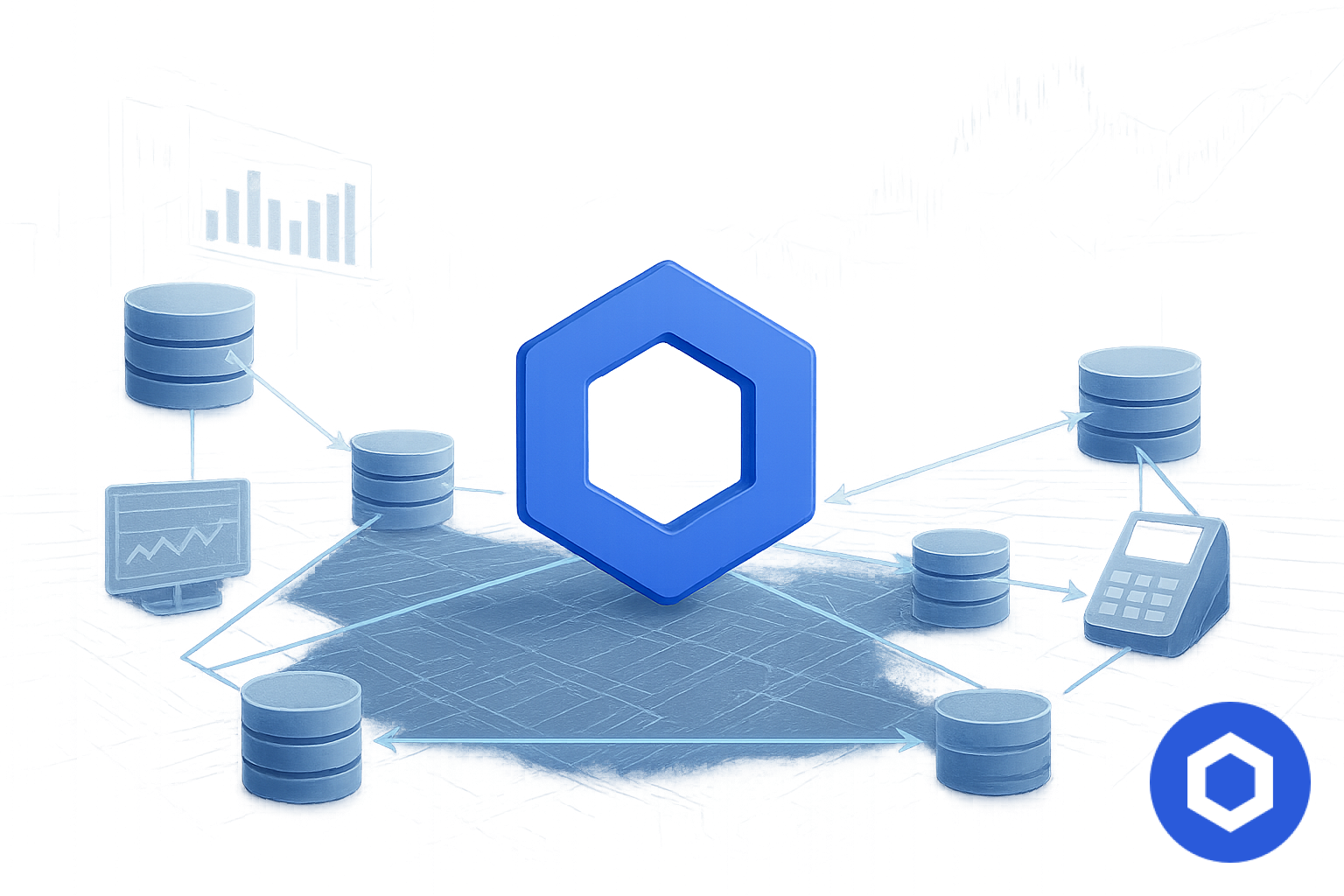
In the rapidly evolving landscape of blockchain technology, Chainlink stands out as a pivotal player. Known for its decentralized Oracle networks, Chainlink solves the critical ‘oracle problem,’ enabling blockchains to access and verify off-chain data securely. This connection allows smart contracts to respond to real-world events, driving innovation across various sectors.
The Oracle Problem and Chainlink’s Solution
Blockchains are inherently isolated systems, lacking the ability to interact with external data sources. This limitation hinders their potential to execute smart contracts based on real-world information. Chainlink addresses this gap by serving as a secure bridge between on-chain smart contracts and off-chain data. Its decentralized oracle network ensures that data is verified, tamper-proof, and reliable, thus enhancing the functionality of blockchains.
Key Features and Token Utility
Chainlink’s offerings extend beyond basic data delivery. It is a comprehensive suite for data, computing, and cross-chain interoperability. The LINK token, Chainlink’s native utility asset, is central to this ecosystem. It functions as a payment currency, collateral mechanism, and network security tool, incentivizing accurate and timely data provision.
Tokenization: A Growing Trend
Tokenization is transforming how assets are managed and traded, providing liquidity and accessibility. Chainlink plays a crucial role in this trend by facilitating the secure transfer of asset data between on-chain and off-chain environments. As the world moves towards greater asset tokenization, Chainlink’s reliable oracle services become increasingly critical.
Market Context and Comparisons
While other blockchain projects like Ethereum focus on staking and network security, Chainlink’s emphasis is on interoperability and data accuracy. Recent developments in the crypto market, such as Tether’s expansion into Saudi Arabia’s real estate through tokenization, highlight the growing demand for secure and reliable data transfer solutions. Chainlink is uniquely positioned to meet these demands, offering a robust infrastructure for real-world applications.
Risks and Opportunities
Despite its pivotal role, Chainlink faces several challenges. Its position as a primary middleware in the Web3 ecosystem exposes it to systemic, operational, and macroeconomic risks. However, these challenges are counterbalanced by significant opportunities. As decentralized finance (DeFi) protocols and large-scale financial institutions increasingly rely on Chainlink’s services, the potential for growth remains substantial.
Conclusion
Chainlink’s ability to bridge the gap between isolated blockchain networks and real-world data sources positions it as a crucial component of the digital economy. Its decentralized oracle networks not only enhance blockchain functionality but also drive forward the broader trend of tokenization. As the ecosystem evolves, Chainlink’s role as a dependable infrastructure layer is set to expand, offering both challenges and opportunities for developers and users alike.