 AAVE
AAVE UNI
UNI SHIB
SHIB AVAX
AVAX SUI
SUI XLM
XLM NEAR
NEAR ZEC
ZEC XMR
XMR USDT
USDT HYPE
HYPE ADA
ADA BNB
BNB USDC
USDC DOGE
DOGE TRX
TRX ANSEM
ANSEM
 XRP
XRP
 ETH
ETH
 TRUMP
TRUMP
 BTC
BTC
 GRAM
GRAM
 SOL
SOL
 DATA
DATA
 LINK
LINK
 TAO
TAO
 DASH
DASH
 XTZ
XTZ
 ATTN
ATTN
 DEV
DEV
 WLFI
WLFI
 USDG
USDG
 CC
CC
 PYUSD
PYUSD
 PAXG
PAXG
 RAIN
RAIN
 FIGR_HELOC
 ONDO
ONDO
 LTC
LTC
 RLUSD
RLUSD
 OKB
OKB
 USDD
USDD
 XAUT
XAUT
 USD1
USD1
 WBT
WBT
 USDY
USDY
 LEO
LEO

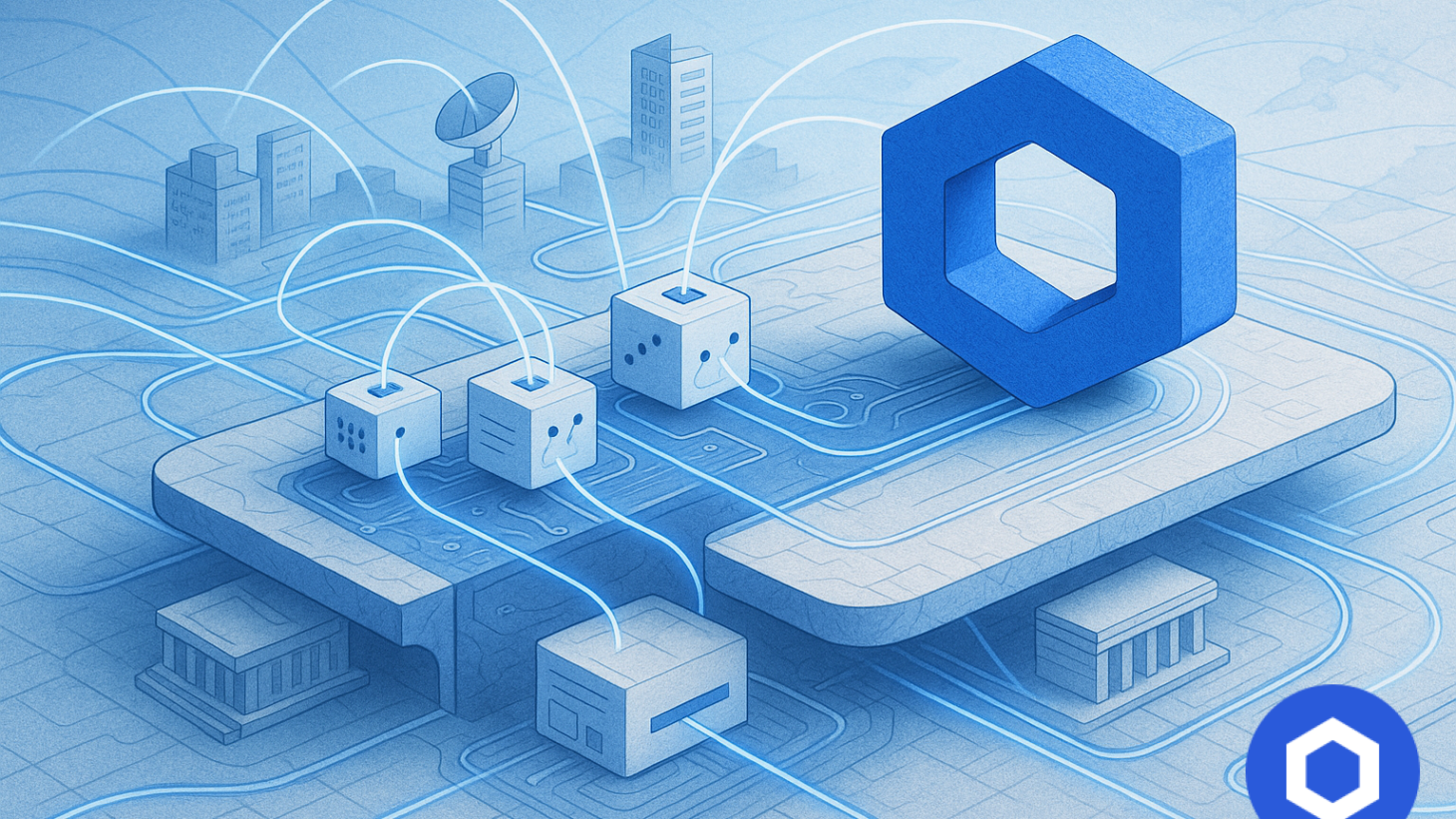
In the rapidly evolving ecosystem of decentralized finance (DeFi) and blockchain technology, Chainlink stands as a pivotal force. As a decentralized oracle network, it addresses the fundamental ‘oracle problem,’ bridging the gap between blockchain-based smart contracts and real-world data. This integration allows smart contracts to interact with outside data sources, enabling a wide range of applications from decentralized finance to supply chain management.
Understanding the Oracle Problem
Blockchains are inherently isolated systems, unable to access external data on their own. This limitation is where Chainlink excels by offering a secure and reliable connection between on-chain smart contracts and off-chain data sources. This capability not only enhances the functionality of smart contracts but also ensures that they execute based on trusted and tamper-proof information.
Chainlink’s Core Infrastructure
Chainlink’s infrastructure is robust, providing a suite of services that extend beyond basic data delivery. It acts as a comprehensive data, computing, and cross-chain interoperability suite. This positions Chainlink as the industry-standard decentralized infrastructure layer, connecting hundreds of blockchains with real-world applications. Notably, its ecosystem supports thousands of integrations across both public Web3 protocols and enterprise solutions.
The Role of LINK Token
The LINK token is integral to Chainlink’s network, functioning as a utility asset for payments, collateral, and network security. This token incentivizes the performance of reliable data services and ensures network integrity by requiring nodes to stake LINK as collateral. This mechanism underpins the trust and security of the entire Chainlink network.
Tokenization and Interoperability
Tokenization is transforming traditional financial systems, and Chainlink’s oracle solutions are at the forefront of this shift. By providing accurate and real-time data, Chainlink facilitates the tokenization of assets, enabling them to be represented and traded on blockchain platforms. This development holds the potential to revolutionize markets by increasing liquidity and accessibility.
Risks and Opportunities
While Chainlink’s middleware position in the blockchain ecosystem provides numerous advantages, it also exposes the network to systemic and operational risks. The network’s reliance on decentralized nodes for data accuracy and security requires continuous monitoring and innovation to mitigate potential vulnerabilities. Furthermore, as the DeFi sector grows, so does the demand for Chainlink’s services, presenting both an opportunity for growth and a challenge to maintain scalability and security.
In conclusion, Chainlink’s ability to connect isolated blockchain networks with real-world data is transforming the way smart contracts are executed. By solving the oracle problem, Chainlink not only enhances the functionality of blockchain applications but also paves the way for new innovations in tokenization and interoperability. As the ecosystem continues to evolve, Chainlink’s role as a reliable and secure oracle network will remain crucial in bridging the gap between digital and real-world assets.