 AAVE
AAVE UNI
UNI SHIB
SHIB AVAX
AVAX SUI
SUI XLM
XLM NEAR
NEAR ZEC
ZEC XMR
XMR USDT
USDT HYPE
HYPE ADA
ADA BNB
BNB USDC
USDC DOGE
DOGE TRX
TRX ANSEM
ANSEM
 XRP
XRP
 ETH
ETH
 TRUMP
TRUMP
 BTC
BTC
 GRAM
GRAM
 SOL
SOL
 DATA
DATA
 LINK
LINK
 TAO
TAO
 DASH
DASH
 XTZ
XTZ
 ATTN
ATTN
 DEV
DEV
 WLFI
WLFI
 USDG
USDG
 CC
CC
 PYUSD
PYUSD
 PAXG
PAXG
 RAIN
RAIN
 FIGR_HELOC
 ONDO
ONDO
 RLUSD
RLUSD
 LTC
LTC
 OKB
OKB
 USDD
USDD
 XAUT
XAUT
 USD1
USD1
 WBT
WBT
 USDY
USDY
 LEO
LEO

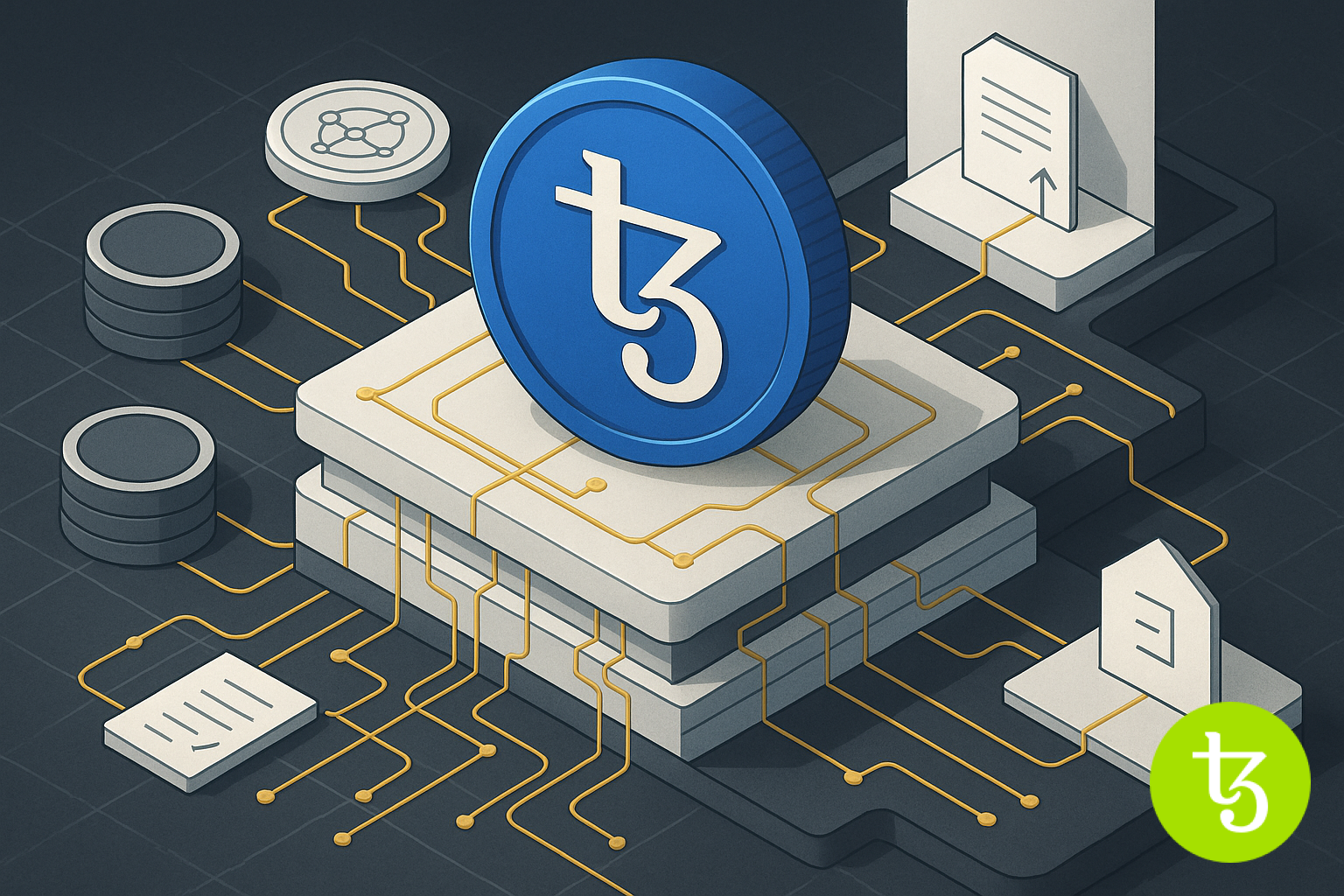
Tezos (XTZ) stands out in the cryptocurrency landscape for its unique approach to blockchain technology, particularly through its Liquid Proof-of-Stake (LPoS) consensus mechanism and on-chain governance. As the digital currency space evolves, Tezos continues to innovate, offering a scalable and energy-efficient alternative to traditional proof-of-work systems.
Understanding Tezos Baking and Liquid Proof-of-Stake
At the heart of Tezos’ blockchain is its Liquid Proof-of-Stake mechanism, which allows stakeholders to participate in the network’s consensus process. Unlike proof-of-work systems that require significant computational resources, LPoS enables any XTZ holder to ‘bake’ or delegate their tokens to validators. This ensures a more democratic and less resource-intensive validation process.
The baking process in Tezos is akin to mining in Bitcoin but is more energy-efficient. Bakers are chosen based on their stake, and they validate transactions and secure the network in exchange for rewards. This mechanism not only secures the network but also incentivizes participation, enhancing decentralization.
Smart Contracts and Scalability
Tezos excels in its support for smart contracts and decentralized applications (dApps). It uses a unique language called Michelson, designed to facilitate formal verification, ensuring that smart contracts are secure and free from bugs. This emphasis on security is crucial as the blockchain expands its use cases in finance, supply chain, and other sectors.
Moreover, Tezos is preparing for its next evolution with Tezos 2.0, which aims to significantly enhance scalability through layer-2 solutions. These enhancements will support mainstream programming languages, making it easier for developers to create applications on the Tezos blockchain.
Governance: A Self-Amending Blockchain
One of Tezos’ defining features is its on-chain governance model, allowing stakeholders to propose and vote on network upgrades. This self-amendment capability minimizes the need for hard forks, which can fragment communities. Through this system, Tezos has managed to implement numerous upgrades, enhancing its functionality and user experience.
However, governance in Tezos is not without challenges. The early days of Tezos were marked by infighting and legal issues, particularly involving its founders, Arthur and Kathleen Breitman. These disputes have largely been resolved, but they serve as a reminder of the complexities inherent in decentralized governance.
The Role of the Tezos Foundation
The Tezos Foundation plays a crucial role in supporting the ecosystem, funding development, and fostering adoption. Despite past controversies, the foundation’s efforts have been instrumental in maintaining Tezos’ growth trajectory. The foundation has also been proactive in supporting initiatives related to Non-Fungible Tokens (NFTs), a burgeoning area within the blockchain world.
Tezos’ energy-efficient model makes it an attractive platform for NFT projects, offering a sustainable alternative to more energy-intensive blockchains. This has led to a growing number of artists and creators choosing Tezos for minting NFTs.
Looking Ahead: Opportunities and Challenges
As Tezos continues to evolve, it faces both opportunities and challenges. The focus on scalability and developer-friendly environments will likely bolster its appeal among developers and enterprises. However, the rapidly changing crypto landscape and competition from other blockchains necessitate continuous innovation and adaptation.
In conclusion, Tezos’ unique approach to consensus, governance, and scalability positions it as a formidable player in the blockchain space. The ongoing efforts by the Tezos Foundation and the community’s commitment to innovation are key factors that will determine its future success. Investors and developers should keep a close watch on Tezos as it navigates the complex dynamics of the cryptocurrency market.