AAVE
AAVE UNI
UNI SHIB
SHIB AVAX
AVAX SUI
SUI XLM
XLM NEAR
NEAR ZEC
ZEC XMR
XMR USDT
USDT HYPE
HYPE ADA
ADA BNB
BNB USDC
USDC DOGE
DOGE TRX
TRX
 XRP
XRP
 ETH
ETH
 TRUMP
TRUMP
 BTC
BTC
 GRAM
GRAM
 SOL
SOL
 DATA
DATA
 LINK
LINK
 TAO
TAO
 DASH
DASH
 XTZ
XTZ
 ATTN
ATTN
 DEV
DEV
 WLFI
WLFI
 ANSEM
ANSEM
 USDG
USDG
 PYUSD
PYUSD
 CC
CC
 RAIN
RAIN
 FIGR_HELOC
 PAXG
PAXG
 OKB
OKB
 XAUT
XAUT
 USDD
USDD
 LTC
LTC
 ONDO
ONDO
 RLUSD
RLUSD
 USD1
USD1
 WBT
WBT
 LEO
LEO
 USDY
USDY

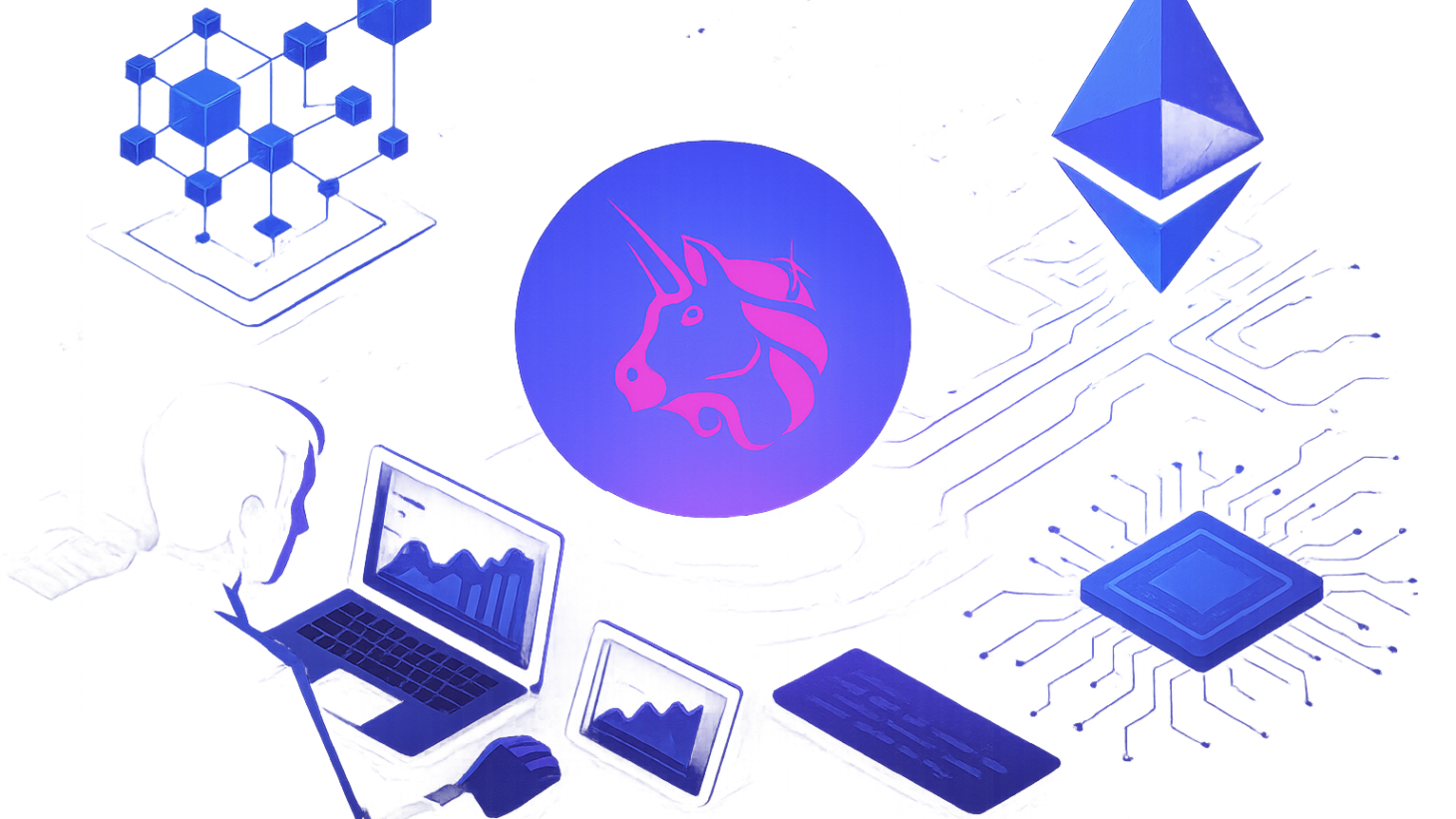
In a world where centralized exchanges often dominate the cryptocurrency landscape, Uniswap stands as a beacon of decentralized finance (DeFi), offering a transformative approach to asset trading. By eliminating the need for intermediaries, Uniswap allows users to swap, list, or provide liquidity for digital assets directly from their self-custody wallets. This article explores how Uniswap is redefining global asset trading through its automated market maker (AMM) protocol and community governance model.
The Uniswap Protocol: A Paradigm Shift
At the heart of Uniswap’s innovation is its open-source AMM, a protocol that dynamically prices assets based on supply and demand through a smart-contract mathematical formula. Unlike traditional order-book exchanges, Uniswap employs liquidity pools, where global users deposit tokens. This mechanism not only democratizes trading but also enhances liquidity, making it easier and faster for traders to execute transactions without the constraints of centralized oversight.
Liquidity Pools: The Engine of Uniswap
Liquidity pools play a crucial role in Uniswap’s ecosystem. They replace traditional order books with a decentralized model that relies on crowdsourced token deposits. For liquidity providers, this model offers potential rewards through transaction fees, although it carries risks such as impermanent loss. This occurs when the value of deposited tokens fluctuates significantly, potentially resulting in a lower dollar value than if the tokens had been held outside the pool.
Governance: Power to the People
Uniswap’s governance model is community-driven, with the native UNI token serving as the primary tool for decision-making. Token holders can propose, debate, and vote on various protocol aspects, including development changes, fee structures, and the distribution of funds. This decentralized governance ensures that Uniswap remains adaptable to the needs of its users, fostering a truly open and collaborative environment.
Market Position and Ecosystem Impact
As one of the largest DeFi platforms, Uniswap routes billions in daily trading volume across multiple chains, including Ethereum, Arbitrum, Optimism, Polygon, and Base. This extensive reach underscores its significant impact on the DeFi landscape, offering a permissionless financial marketplace that operates independently of traditional financial systems.
In contrast to recent industry challenges, such as the lawsuit involving DWF Labs and BitGo over alleged token lock-up breaches, Uniswap’s model highlights the advantages of decentralized control. While centralized entities may face legal and operational hurdles, Uniswap’s open-source nature provides resilience and adaptability.
Risks and Challenges
Despite its advantages, Uniswap is not without risks. Smart contract bugs pose potential vulnerabilities, as the entire protocol relies on automated code. Thus, rigorous security audits and community vigilance are critical to maintaining platform integrity. Additionally, the risk of impermanent loss can deter potential liquidity providers, who must weigh the benefits of fee earnings against potential value depreciation.
The Future of DeFi with Uniswap
Uniswap’s continuous upgrades through community governance ensure it remains at the forefront of DeFi innovation. As the ecosystem evolves, Uniswap’s ability to adapt to new challenges and opportunities will determine its long-term success. The protocol’s commitment to decentralization and user empowerment positions it as a key player in shaping the future of digital asset trading.
In conclusion, Uniswap’s decentralized AMM and governance protocol represent a fundamental shift in how digital assets are traded. By removing intermediaries and embracing an open-source model, Uniswap creates a more inclusive and efficient marketplace. For blockchain developers, DeFi yield providers, and digital asset traders, Uniswap offers a compelling alternative to traditional financial systems, embodying the transformative potential of decentralized finance.