TRUMP
TRUMP ETH
ETH BTC
BTC XTZ
XTZ XRP
XRP SOL
SOL LINK
LINK TAO
TAO DASH
DASH TONCOIN
 STORY
STORY WLFI
WLFI RICH
RICH DEV3
DEV3 ATTN
ATTN




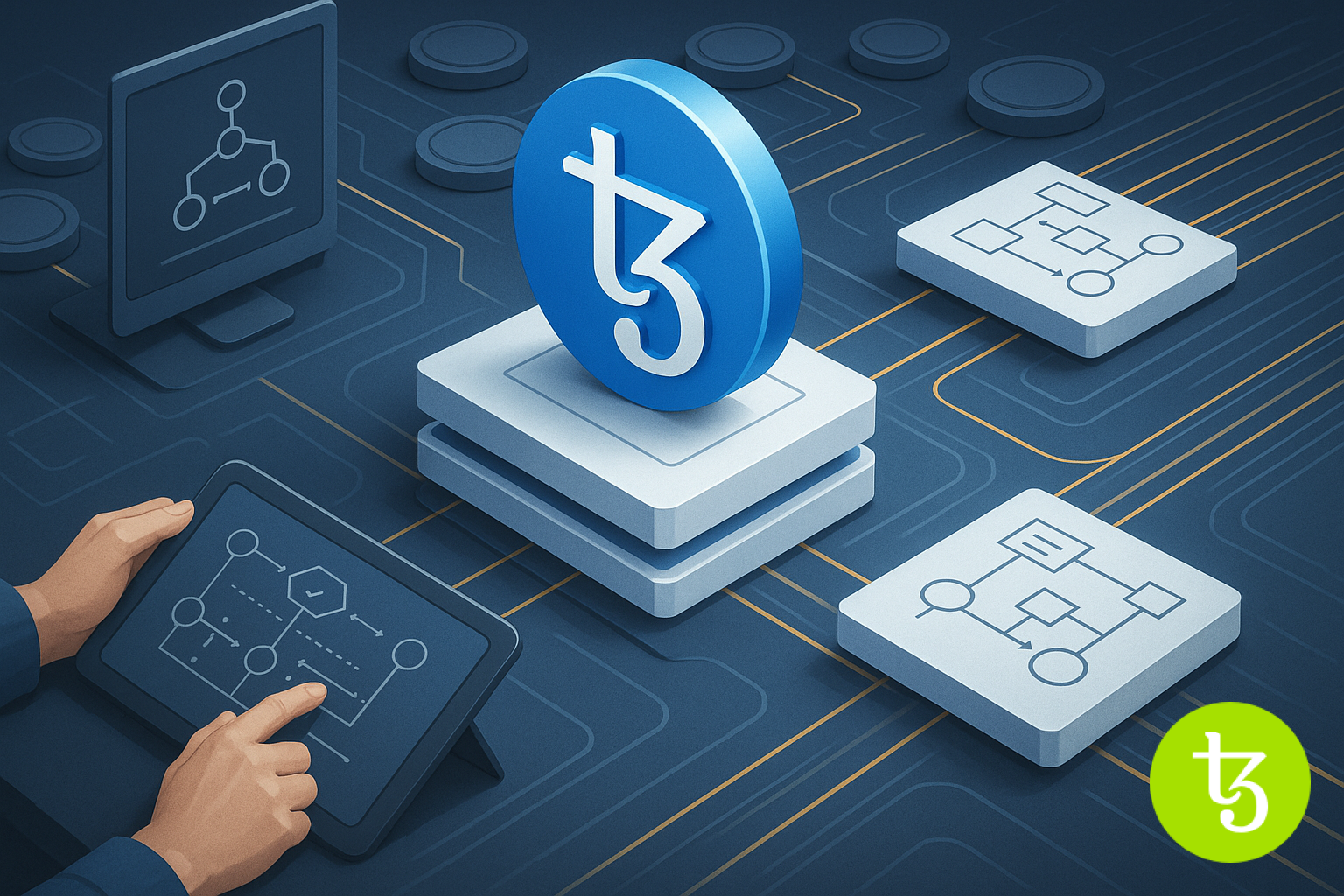
Tezos: Revolutionizing Blockchain with Liquid Proof of Stake

Tezos, a blockchain platform known for its focus on code security, on-chain governance, and decentralization, is gaining momentum in the cryptocurrency world. Central to its appeal is its unique Liquid Proof of Stake (LPoS) consensus mechanism, which empowers stakeholders to participate actively in the network’s governance and security. Unlike traditional Proof of Stake systems, LPoS allows token holders to delegate their validation rights without transferring ownership. This flexibility fosters a more democratic and decentralized ecosystem.
Baking: The Heart of Tezos’ Consensus
Tezos’ consensus mechanism revolves around the concept of baking. In this context, bakers are akin to miners in a Proof of Work system. They validate transactions and add new blocks to the blockchain. The system rewards bakers with newly minted Tez (XTZ) tokens, offering an incentive to maintain network security and integrity. Crucially, any Tezos holder can become a baker by staking a minimum amount of XTZ, or they can delegate their tokens to a baker for rewards, democratizing the process.
Governance and Smart Contracts: A Self-Amending Ledger
Tezos distinguishes itself with its robust on-chain governance, enabling continuous protocol upgrades without hard forks. This self-amending feature allows stakeholders to vote on proposed changes, ensuring that the system evolves in alignment with community interests. For developers, this means a stable environment for building smart contracts, which are essential for decentralized applications (dApps).
Tezos’ smart contracts are written in Michelson, a language designed for formal verification. This ensures high-security standards, a critical factor for developers building applications that handle substantial financial transactions.
Navigating Challenges: The Human Element
Despite its technical prowess, Tezos has faced its share of challenges. The project’s founders, Arthur and Kathleen Breitman, were embroiled in legal disputes that initially cast a shadow over the foundation. However, the community’s resilience and commitment to decentralization have been pivotal in overcoming these hurdles.
Infighting and governance disputes occasionally surface, reflecting the complexities of managing a decentralized ecosystem. Nonetheless, these challenges have spurred a more robust governance model, with clearer guidelines and a more engaged community.
Non-Fungible Tokens (NFTs) and Beyond
Tezos is also making significant strides in the NFT space. Its energy-efficient blockchain has become a preferred choice for artists and creators seeking sustainable minting options. Platforms like Hic et Nunc have emerged, leveraging Tezos’ capabilities to offer a vibrant marketplace for digital art.
Moreover, Tezos’ layer 2 solutions, such as Smart Rollups, provide scalability, enabling high-throughput applications without compromising security. This positions Tezos as a formidable player in the evolving blockchain landscape.
Conclusion: The Road Ahead for Tezos
Tezos’ innovative approach to blockchain technology, characterized by its Liquid Proof of Stake mechanism and on-chain governance, sets it apart in a crowded field. While challenges remain, the platform’s adaptability and focus on community-driven development continue to drive its evolution.
For Tezos to solidify its position, ongoing engagement with its community and continued technological advancements are crucial. The platform’s success hinges on its ability to navigate internal dynamics while capitalizing on its technical strengths. As Tezos moves forward, its commitment to decentralization and innovation will likely dictate its trajectory in the blockchain realm.