 AAVE
AAVE UNI
UNI SUI
SUI NEAR
NEAR ZEC
ZEC USDT
USDT ADA
ADA BNB
BNB USDC
USDC DOGE
DOGE TRX
TRX XTZ
XTZ ATTN
ATTN DASH
DASH TAO
TAO TRUMP
TRUMP
 XRP
XRP
 ETH
ETH
 BTC
BTC
 GRAM
GRAM
 SOL
SOL
 DATA
DATA
 LINK
LINK
 WLFI
WLFI
 DEV
DEV
 ANSEM
ANSEM
 USDG
USDG
 CC
CC
 PYUSD
PYUSD
 RAIN
RAIN
 XLM
XLM
 FIGR_HELOC
 USDD
USDD
 OKB
OKB
 PAXG
PAXG
 LTC
LTC
 HYPE
HYPE
 RLUSD
RLUSD
 XMR
XMR
 USD1
USD1
 WBT
WBT
 ONDO
ONDO
 XAUT
XAUT
 AVAX
AVAX
 LEO
LEO
 USDY
USDY

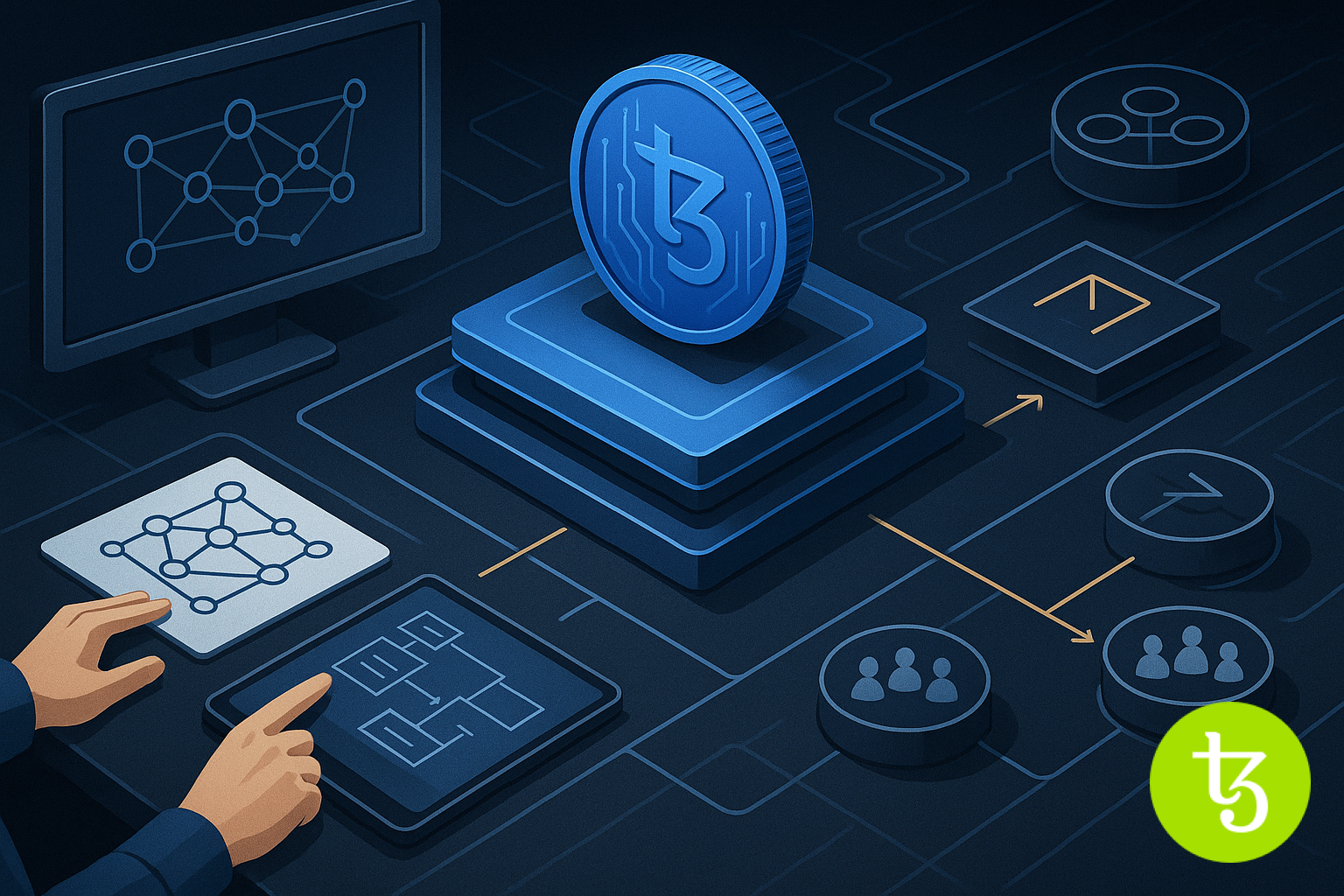
Tezos has long been a prominent player in the blockchain space, recognized for its unique approach to governance and consensus. As the crypto landscape evolves, Tezos continues to stand out by incorporating a Liquid Proof-of-Stake (LPoS) mechanism, which allows stakeholders to participate in network security and governance. This article delves into the intricacies of Tezos’ baking process, its governance model, and the challenges it faces amidst internal infighting and past controversies.
The Tezos Baking Process
Baking in Tezos is akin to mining in Bitcoin but with a few distinctions. Unlike Proof-of-Work (PoW) systems, Tezos uses LPoS, which is energy-efficient and enables more participants to join the consensus process. Stakeholders, or ‘bakers,’ play a crucial role by validating transactions and creating new blocks. They can either bake directly or delegate their tokens to other bakers, providing flexibility and inclusivity.
In return for their participation, bakers earn rewards in the form of Tez (XTZ), Tezos’ native cryptocurrency. This incentivizes network security and ensures decentralization. The more XTZ a baker holds or is delegated, the higher their chances of being selected to bake the next block, making active participation critical for maximizing rewards.
Governance and Smart Contracts
Tezos prides itself on its on-chain governance mechanism, which allows seamless protocol upgrades without the need for hard forks. This self-amendment capability is a key feature, enabling the community to propose, vote on, and implement changes directly on the blockchain. Such a system empowers stakeholders and reduces the risk of contentious splits that have plagued other networks.
Smart contracts on Tezos leverage formal verification, a mathematically rigorous method that enhances security and reliability. This makes Tezos an attractive platform for developers seeking to deploy decentralized applications (dApps) that require high assurance levels, such as financial services and asset tokenization.
Challenges: Infighting and Controversies
Despite its technical prowess, Tezos has faced its share of challenges, particularly concerning governance disputes and founder controversies. The Tezos Foundation, which oversees the project’s development, has been embroiled in legal battles and leadership conflicts, casting a shadow over its otherwise robust protocol.
Infighting among stakeholders and allegations against founders Arthur and Kathleen Breitman have occasionally hindered progress. However, the community’s resilience and commitment to open governance have helped navigate these challenges, ensuring that development remains on track.
NFTs and Ecosystem Development
Tezos has also made significant inroads into the burgeoning NFT market. Its environmentally friendly LPoS system has attracted artists and platforms looking for sustainable alternatives. The blockchain’s scalability and low transaction fees make it an ideal choice for NFT minting and trading.
The ecosystem continues to grow with layer 2 solutions and smart rollups, enhancing scalability and composability. These developments are crucial as Tezos aims to support mainstream programming languages, broadening its appeal to developers across various sectors.
The Path Forward
Tezos’ future lies in its ability to maintain a delicate balance between innovation and governance. The network’s adaptability through self-amendment positions it well to respond to technological shifts and market demands. However, the ongoing challenge will be to manage internal conflicts and ensure that governance remains transparent and inclusive.
Success for Tezos hinges on continued community engagement and the effective resolution of past controversies. The blockchain’s unique features and strong community support could see it rise as a leader in the space, provided it navigates its internal and external challenges adeptly.