 AAVE
AAVE UNI
UNI SHIB
SHIB AVAX
AVAX SUI
SUI XLM
XLM NEAR
NEAR ZEC
ZEC XMR
XMR USDT
USDT HYPE
HYPE ADA
ADA BNB
BNB USDC
USDC DOGE
DOGE TRX
TRX ANSEM
ANSEM
 XRP
XRP
 ETH
ETH
 TRUMP
TRUMP
 BTC
BTC
 GRAM
GRAM
 SOL
SOL
 DATA
DATA
 LINK
LINK
 TAO
TAO
 DASH
DASH
 XTZ
XTZ
 ATTN
ATTN
 DEV
DEV
 WLFI
WLFI
 USDG
USDG
 CC
CC
 PYUSD
PYUSD
 PAXG
PAXG
 RAIN
RAIN
 FIGR_HELOC
 ONDO
ONDO
 RLUSD
RLUSD
 LTC
LTC
 OKB
OKB
 USDD
USDD
 XAUT
XAUT
 USD1
USD1
 WBT
WBT
 USDY
USDY
 LEO
LEO

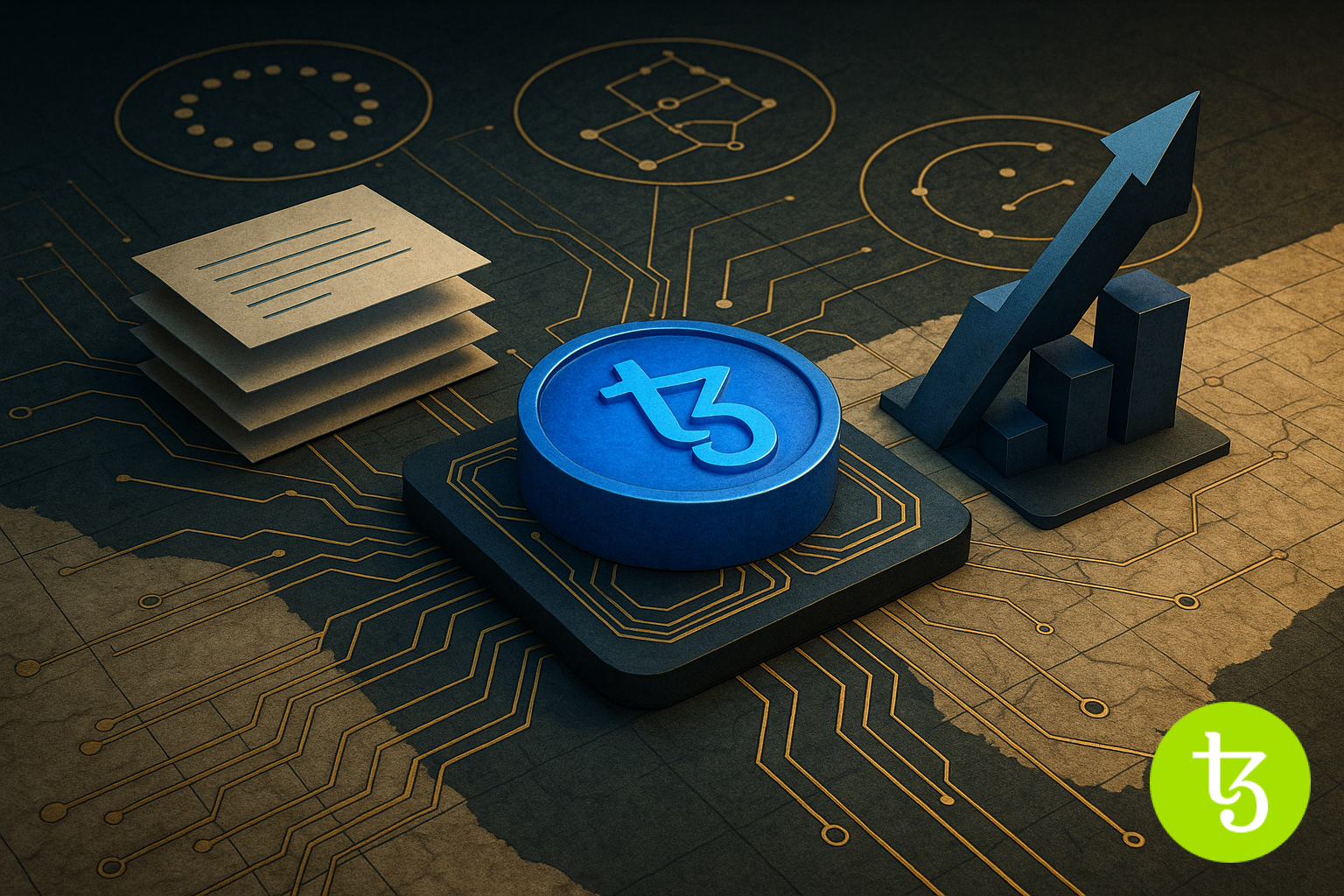
Tezos stands out in the crowded blockchain ecosystem with its distinctive approach to consensus and governance. Since its inception in 2018, Tezos has been a pioneer in the adoption of Liquid Proof of Stake (LPoS), a consensus mechanism that combines the benefits of security, decentralization, and energy efficiency. This unique approach allows XTZ holders to actively participate in securing the network, either directly through baking or indirectly via delegation.
Understanding Tezos Baking and LPoS
Baking in Tezos is akin to mining in Bitcoin but without the energy-intensive drawbacks. Bakers validate transactions and secure the network, earning rewards in the form of XTZ. Unlike traditional Proof of Stake, LPoS offers more flexibility and inclusivity. Stakeholders can delegate their tokens to bakers without transferring ownership, maintaining control over their assets while participating in network security.
Smart Contracts and Formal Verification
Tezos is also known for its robust support of smart contracts. It utilizes Michelson, a domain-specific language designed for formal verification. This ensures that smart contracts are mathematically proven to be correct, reducing the risk of bugs and vulnerabilities that have plagued other platforms. With the upcoming Tezos 2.0, the blockchain aims to support mainstream programming languages like JavaScript and Python, enhancing its accessibility to developers worldwide.
Governance: A Democratic Approach
One of Tezos’ most distinctive features is its on-chain governance system. This allows stakeholders to propose and vote on network upgrades, ensuring that the platform evolves without the need for hard forks. This democratic process has enabled Tezos to implement nine successful upgrades since its launch, each improving the network’s scalability, security, and functionality.
Challenges: Founders and Infighting
Despite its technical advancements, Tezos has not been without controversy. The project’s founders, Arthur and Kathleen Breitman, faced legal challenges and internal disputes in the early days, which led to infighting and delays. However, these issues have largely been resolved, and the Tezos Foundation now focuses on fostering a supportive community and promoting adoption.
Tezos and NFTs
Recently, Tezos has gained traction in the NFT space. Its energy-efficient blockchain and low transaction fees make it an attractive platform for artists and creators. The Tezos ecosystem hosts numerous NFT marketplaces, offering a sustainable alternative to Ethereum’s energy-intensive network.
The Unanswered Questions
As Tezos continues to innovate, several questions remain. How will the integration of mainstream programming languages affect developer adoption? Can Tezos maintain its technical edge as competition in the blockchain space intensifies? These are critical considerations for stakeholders and observers alike.
In conclusion, Tezos presents a compelling case for the future of blockchain technology. Its commitment to innovation, governance, and sustainability positions it as a leader in the space. However, with ongoing technological advancements and market dynamics, stakeholders must remain vigilant and adaptive to ensure continued success.