 AAVE
AAVE UNI
UNI SHIB
SHIB AVAX
AVAX SUI
SUI XLM
XLM NEAR
NEAR ZEC
ZEC XMR
XMR USDT
USDT HYPE
HYPE ADA
ADA BNB
BNB USDC
USDC DOGE
DOGE TRX
TRX ANSEM
ANSEM
 XRP
XRP
 ETH
ETH
 TRUMP
TRUMP
 BTC
BTC
 GRAM
GRAM
 SOL
SOL
 DATA
DATA
 LINK
LINK
 TAO
TAO
 DASH
DASH
 XTZ
XTZ
 ATTN
ATTN
 DEV
DEV
 WLFI
WLFI
 USDG
USDG
 CC
CC
 PYUSD
PYUSD
 PAXG
PAXG
 RAIN
RAIN
 FIGR_HELOC
 ONDO
ONDO
 RLUSD
RLUSD
 LTC
LTC
 OKB
OKB
 USDD
USDD
 XAUT
XAUT
 USD1
USD1
 WBT
WBT
 USDY
USDY
 LEO
LEO

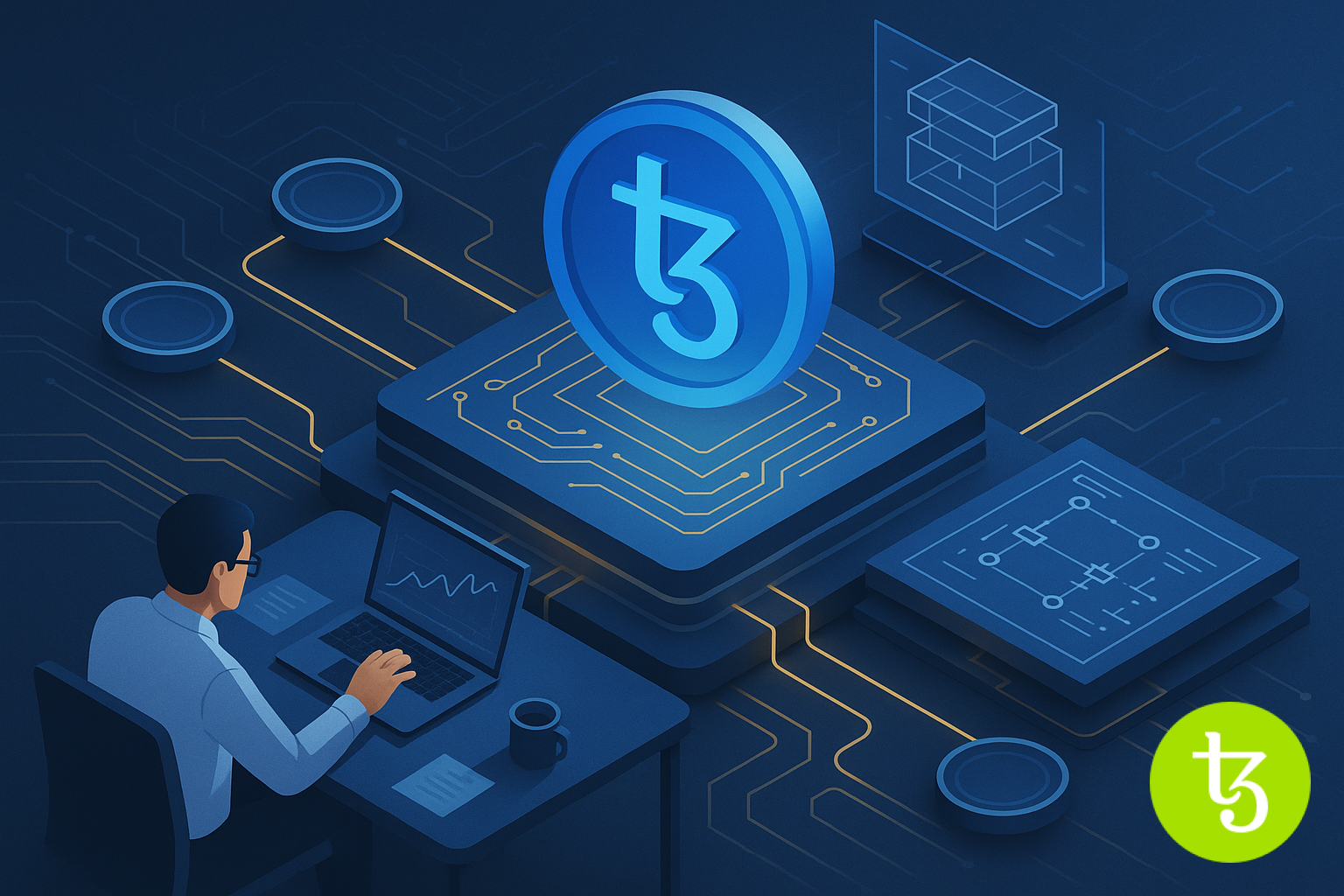
Tezos (XTZ) stands out in the competitive world of blockchain with its unique approach to consensus and governance. Unlike other blockchains, Tezos employs a Liquid Proof-of-Stake (LPoS) mechanism which not only ensures energy efficiency but also empowers stakeholders to participate in the network’s evolution. This article delves into the intricacies of Tezos’ baking process, its smart contract capabilities, governance, and the underlying dynamics that influence its ecosystem.
Understanding Liquid Proof-of-Stake and Baking
Tezos’ LPoS is a refined version of the Proof-of-Stake model, allowing stakeholders to either directly engage in consensus or delegate their voting rights. This system enhances decentralization, giving power to the community rather than concentrating it among a few miners. The process of ‘baking’ in Tezos refers to the creation of new blocks, akin to mining in Bitcoin. Bakers are rewarded for securing the network, with rewards distributed based on the number of XTZ staked. This approach not only incentivizes participation but also ensures network security and integrity.
Smart Contracts and Formal Verification
Tezos is renowned for its emphasis on formal verification, a process that mathematically proves the correctness of smart contracts. This is crucial in preventing costly errors and vulnerabilities that have plagued other blockchain networks. By supporting mainstream programming languages in its upcoming version, Tezos 2.0 aims to widen the developer base, further boosting its smart contract capabilities and adoption.
On-Chain Governance: A Double-Edged Sword
One of Tezos’ defining features is its robust on-chain governance system. Stakeholders can propose and vote on upgrades, allowing the blockchain to evolve without the need for contentious hard forks. This self-amendment capability positions Tezos as a flexible and adaptive blockchain. However, this system is not without its challenges. Governance disputes have occasionally led to community infighting, highlighting the delicate balance between decentralization and decision-making efficiency.
Navigating Challenges: Corrupt Founders and Infighting
The Tezos ecosystem has not been immune to controversy. Initial legal and regulatory challenges centered around its founders, Arthur and Kathleen Breitman, cast a shadow over its early years. Despite these hurdles, Tezos has maintained a strong reputation for technical excellence, largely due to its vibrant and supportive community. The Tezos Foundation plays a crucial role in navigating these challenges, ensuring that the project remains on stable ground.
NFTs and Market Dynamics
Tezos has also carved a niche in the NFT space, offering a more environmentally friendly alternative to Ethereum. Its energy-efficient consensus mechanism makes it an attractive platform for artists and creators looking to mint NFTs without the hefty carbon footprint. As the NFT market continues to evolve, Tezos’ unique positioning could drive significant growth and adoption.
Opportunities and Risks
Tezos’ journey is a testament to the potential of innovative blockchain governance and consensus mechanisms. Its ability to adapt and self-amend without disruptive forks provides a stable and secure environment for developers and users alike. However, the network must continue to navigate technological competition and internal governance challenges to sustain its growth trajectory.
As Tezos prepares for the launch of Tezos 2.0, the focus will be on enhancing scalability and expanding its developer-friendly features. This evolution presents a significant opportunity to capture a larger share of the blockchain market, particularly in the realm of smart contracts and NFTs. Nonetheless, stakeholders must remain vigilant in addressing governance disputes and ensuring the integrity of the network.