 AAVE
AAVE UNI
UNI AVAX
AVAX SUI
SUI XLM
XLM NEAR
NEAR ZEC
ZEC XMR
XMR USDT
USDT ADA
ADA BNB
BNB USDC
USDC DOGE
DOGE TRX
TRX XTZ
XTZ ATTN
ATTN DASH
DASH
 XRP
XRP
 ETH
ETH
 TRUMP
TRUMP
 BTC
BTC
 GRAM
GRAM
 SOL
SOL
 DATA
DATA
 LINK
LINK
 TAO
TAO
 DEV
DEV
 WLFI
WLFI
 ANSEM
ANSEM
 USDG
USDG
 PYUSD
PYUSD
 CC
CC
 RAIN
RAIN
 PAXG
PAXG
 FIGR_HELOC
 HYPE
HYPE
 OKB
OKB
 LTC
LTC
 USDD
USDD
 RLUSD
RLUSD
 ONDO
ONDO
 USD1
USD1
 XAUT
XAUT
 WBT
WBT
 LEO
LEO
 USDY
USDY

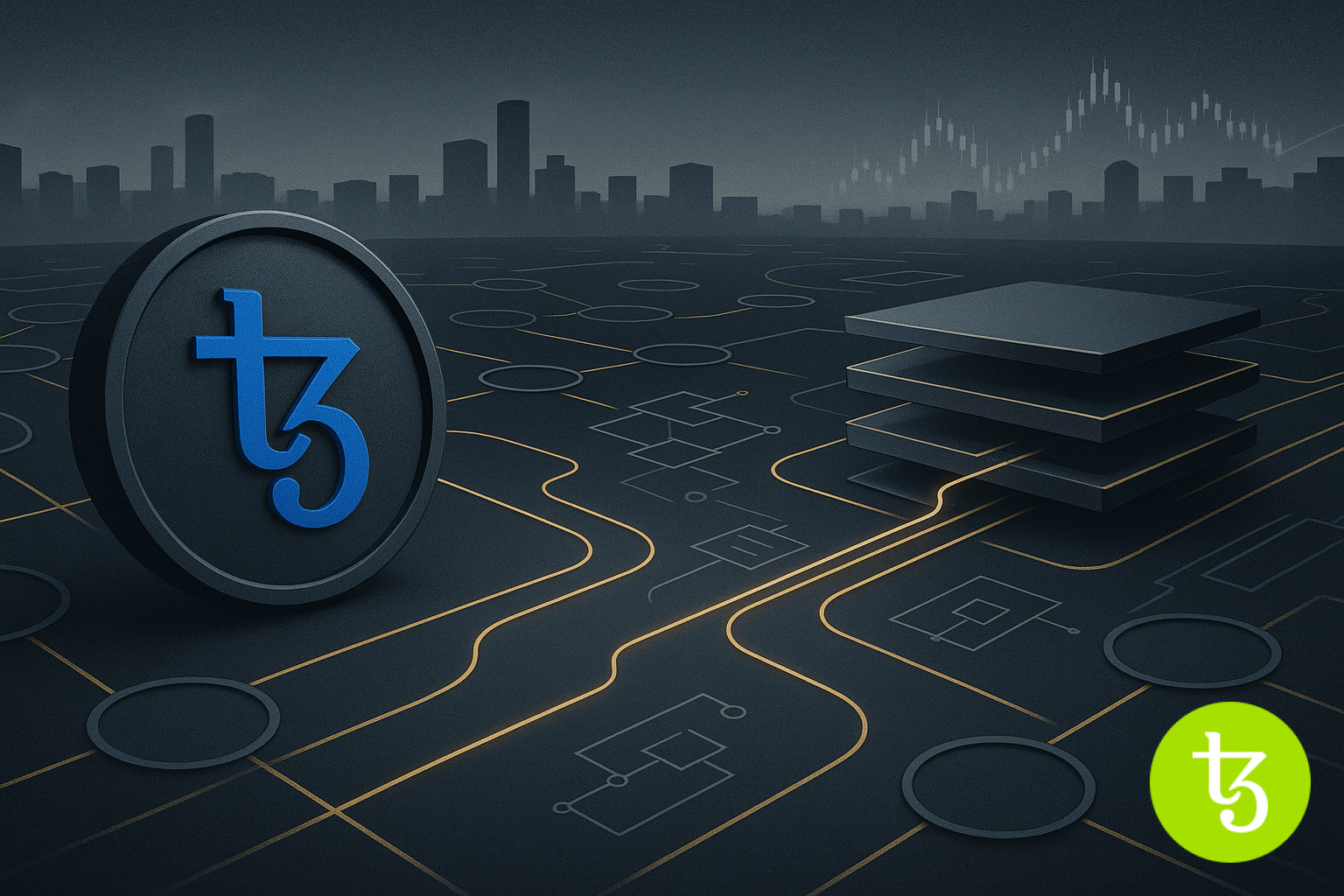
While headlines often spotlight the volatility and speculative nature of cryptocurrency markets, a quieter, yet powerful revolution is unfolding in the world of blockchain technology. Tezos, a unique proof-of-stake blockchain network, stands out not merely for its cryptocurrency (XTZ) but for its robust and flexible architecture that is reshaping the way smart contracts are developed and deployed.
Tezos: A Brief Overview
Launched in 2018, Tezos was designed to overcome some of the limitations of earlier blockchains like Bitcoin and Ethereum. Its governance model allows stakeholders to participate in protocol upgrades without the need for hard forks, which have historically caused division in other blockchain communities. This self-amending capability ensures that Tezos can evolve smoothly with the needs of its users.
Why Tezos Matters for Developers
For developers, Tezos offers a platform that prioritizes security and formal verification. Smart contracts on Tezos are written in Michelson, a language that supports formal verification, a process that mathematically proves the correctness of code. This feature is crucial for applications where security is paramount, such as financial services and supply chain management.
Moreover, Tezos’s modular architecture means that developers can implement updates and new features without disrupting the network. This flexibility has attracted a growing community of developers eager to leverage its potential for building decentralized applications (dApps).
The Stakeholder Impact
For stakeholders, the proof-of-stake consensus mechanism used by Tezos offers an environmentally friendly alternative to the energy-intensive proof-of-work models. Holders of XTZ can participate in the network by baking, which is Tezos’s term for staking, to validate transactions and secure the network. This not only supports the network but also provides a way for holders to earn rewards, creating a mutually beneficial ecosystem.
In addition, the governance model of Tezos is a significant departure from traditional cryptocurrency networks. Stakeholders can propose, vote on, and implement changes to the protocol. This participatory approach not only democratizes the decision-making process but also ensures that the network remains aligned with the interests of its community.
Institutional Adoption and Future Prospects
Tezos has been making significant strides in gaining institutional adoption. Notable partnerships, such as those with Societe Generale and BNP Paribas, highlight its growing acceptance in the financial sector. These collaborations often focus on tokenization of assets, a trend that is transforming how securities are issued and traded.
Furthermore, Tezos’s focus on scalability and security makes it an attractive option for enterprise solutions. As more institutions explore blockchain technology for various applications, Tezos’s robust infrastructure positions it as a leading contender in the space.
Looking ahead, the success of Tezos will likely depend on its ability to maintain its unique governance structure and continue to attract innovative projects. The network’s adaptability and developer-friendly environment suggest a promising future, but it will need to navigate the challenges of competition and regulatory scrutiny.
Conclusion: The Road Ahead for Tezos
In conclusion, Tezos presents a compelling case as a forward-thinking blockchain platform that combines technical innovation with community-driven governance. For developers, traders, and institutions, understanding the nuances of Tezos’s architecture could be key to leveraging its potential benefits. However, the ultimate test will be how well Tezos manages to integrate into broader financial systems and withstand the pressures of an ever-evolving regulatory landscape.
The condition that would confirm Tezos’s thesis as a transformative blockchain lies in its ability to scale while maintaining decentralization and security. Conversely, failure to adapt to regulatory changes or to foster community engagement could weaken its position in the competitive blockchain arena.