 XRP
XRP AAVE
AAVE ZEC
ZEC USDT
USDT ADA
ADA BNB
BNB DOGE
DOGE TRX
TRX XTZ
XTZ DASH
DASH TAO
TAO TRUMP
TRUMP SOL
SOL ETH
ETH LINK
LINK BTC
BTC NEAR
NEAR
 GRAM
GRAM
 DATA
DATA
 WLFI
WLFI
 ATTN
ATTN
 DEV
DEV
 ANSEM
ANSEM
 UNI
UNI
 CC
CC
 USDC
USDC
 RAIN
RAIN
 XLM
XLM
 USDG
USDG
 HYPE
HYPE
 SUI
SUI
 PYUSD
PYUSD
 WBT
WBT
 RLUSD
RLUSD
 USD1
USD1
 XMR
XMR
 USDD
USDD
 ONDO
ONDO
 PAXG
PAXG
 AVAX
AVAX
 OKB
OKB
 LEO
LEO
 LTC
LTC
 FIGR_HELOC
 XAUT
XAUT
 HTX
HTX
 USDY
USDY

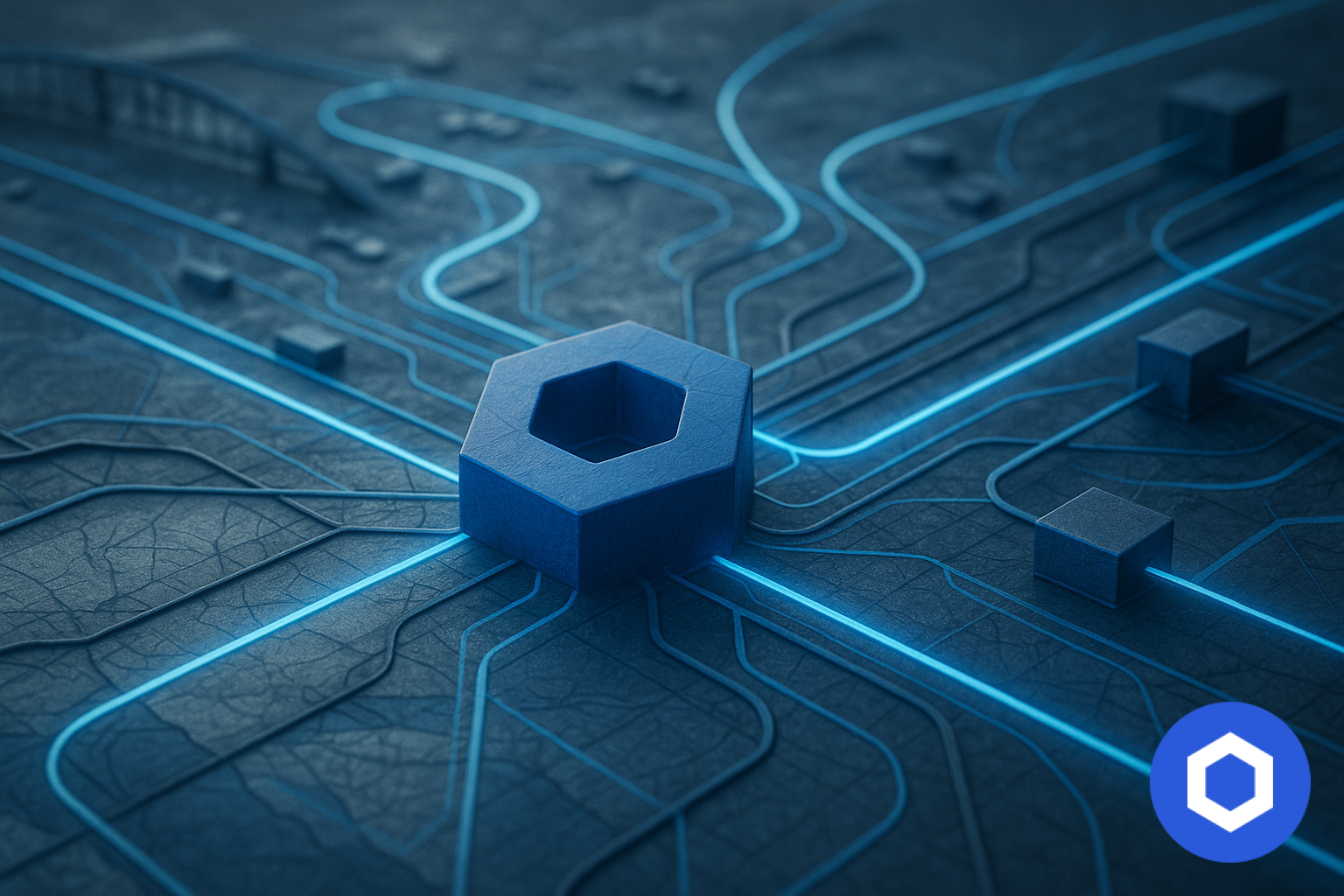
In the rapidly evolving world of blockchain technology, Chainlink has emerged as a pivotal player, especially in the realm of tokenization. As the blockchain ecosystem struggles with the isolation problem, Chainlink’s decentralized oracle networks provide a critical bridge to the real world. This capability not only enhances interoperability but also propels the adoption of smart contracts that rely on verified, tamper-proof data.
Understanding Chainlink’s Oracle Networks
Chainlink, primarily operational on the Ethereum network, is renowned for solving the ‘oracle problem.’ Blockchains, by design, cannot access off-chain data or systems directly. Chainlink’s oracle networks act as intermediaries, ensuring that smart contracts can securely interact with real-world data, such as market prices, weather reports, and more.
The importance of this cannot be overstated. For decentralized finance (DeFi) protocols and large-scale enterprises, having access to reliable external data is vital for executing complex transactions and operations. Chainlink’s oracles thus become indispensable, enabling smart contracts to respond dynamically to real-world events.
Tokenization: Chainlink’s Impact
The tokenization of assets has been a hot topic lately. According to a CoinDesk article, tokenized equities trading reached a record $3.86 billion in June, driven in part by high-profile IPOs like SpaceX. While Chainlink is not directly mentioned in such specific numbers, its infrastructure underpins the secure and reliable execution of tokenized asset transactions.
Tokenization transforms various assets, from real estate to equities, into digital tokens that can be traded on blockchain platforms. This democratizes access, increases liquidity, and reduces settlement times. Chainlink’s oracle networks ensure that the data needed to execute these trades is accurate and up-to-date, mitigating risks associated with misinformation or delays.
Adoption and Ecosystem Expansion
Chainlink’s ecosystem has grown exponentially, integrating thousands of projects across public Web3 protocols. Its role as a middleware solution in blockchain networks positions it as an industry standard, potentially influencing user behavior and developer incentives.
Notably, the BlackRock-backed Securitize’s recent SPAC debut highlighted the broader tokenization trend, though it faced a 40% price slide. Despite this, the demand for tokenized assets remains robust, underscoring Chainlink’s vital role in ensuring the reliability and security of these transactions.
Risks and Opportunities
While Chainlink’s infrastructure offers immense opportunities, it is not without risks. As the primary middleware of Web3, it faces unique systemic and operational challenges. Macroeconomic factors, such as regulatory shifts and market volatility, can also impact its network operations.
However, the opportunities are substantial. With the demand for decentralized applications and tokenized assets continuing to rise, Chainlink’s role in providing secure and reliable data feed becomes increasingly critical. Its utility token, LINK, serves as the backbone of this ecosystem, used for payment, collateral, and network security.
In conclusion, Chainlink’s decentralized oracle networks are transforming how blockchains interact with the real world, thereby catalyzing the tokenization trend. As it continues to expand its ecosystem and address operational challenges, Chainlink remains a cornerstone of the blockchain infrastructure, poised to drive further innovations in the space.