 XTZ
XTZ DASH
DASH TAO
TAO TRUMP
TRUMP XRP
XRP TONCOIN
 SOL
SOL ETH
ETH LINK
LINK BTC
BTC WLFI
WLFI RICH
RICH DEV3
DEV3 ATTN
ATTN





Bitcoin’s Long-Term Growth Amidst Market Volatility
Bitcoin, the world’s first decentralized digital currency, continues to captivate both tech enthusiasts and financial investors. As a decentralized form of money, Bitcoin operates without a central authority, allowing users to transact directly over the internet. This unique attribute has made Bitcoin a revolutionary force in the financial world, offering both financial independence and protection against inflation. However, its journey is marked by significant market volatility, a characteristic that both intrigues and deters potential investors.
Understanding Bitcoin’s Market Dynamics
The recent market movements have once again highlighted Bitcoin’s inherent volatility. In a span of days, Bitcoin’s price can swing dramatically, as seen when it recently dipped to $58,000 before recovering to near $60,000. This type of fluctuation is not uncommon, with the cryptocurrency often experiencing sharp price changes driven by a variety of factors, including market speculation, regulatory developments, and macroeconomic events.
For instance, the potential for Federal Reserve rate hikes has caused ripples across financial markets, including Bitcoin. As investors reassess risk, Bitcoin’s price can be influenced by broader economic conditions. Moreover, the cryptocurrency’s decentralized nature means it operates continuously on a global scale, leaving it susceptible to rapid changes in investor sentiment.
Bitcoin’s Long-Term Growth Potential
Despite the short-term volatility, many investors remain bullish on Bitcoin’s long-term growth prospects. The cryptocurrency’s fixed supply of 21 million coins offers a scarcity that can drive value appreciation over time, especially as traditional fiat currencies face inflationary pressures. This digital scarcity is a key selling point for Bitcoin, often likened to ‘digital gold,’ providing a hedge against inflation.
Moreover, Bitcoin’s utility as a censorship-resistant medium of exchange and a long-term store of value continues to attract institutional and retail investors alike. Innovative financial models, such as those proposed by real estate investor Grant Cardone, who plans to buy Bitcoin using real estate cash flows, illustrate the growing integration of Bitcoin into traditional financial strategies.
Cardone’s approach highlights a shift in how investors perceive Bitcoin, viewing temporary price declines as opportunities to accumulate rather than exit. This sentiment aligns with the broader trend of Bitcoin adoption, where the cryptocurrency is increasingly seen as a critical component of a diversified investment portfolio.
Market Volatility: A Double-Edged Sword
While Bitcoin’s volatility poses risks, it also offers substantial opportunities for profit. Traders often capitalize on price swings, employing strategies such as derivatives trading to hedge risks or amplify returns. However, these activities come with their own set of challenges, as evidenced by the recent $1 billion wipeout in futures positions when Bitcoin’s price dipped.
In this environment, companies like MicroStrategy, led by Michael Saylor, have doubled down on their Bitcoin holdings despite experiencing significant paper losses. MicroStrategy’s strategy underscores a steadfast belief in Bitcoin’s long-term value, even as the company’s valuation has at times fallen below the value of its Bitcoin holdings. This approach draws criticism from some quarters, with Ripple CEO Brad Garlinghouse describing it as ‘financial engineering’ that distracts the market.
Conclusion: Navigating Future Challenges
Bitcoin’s journey is far from over, with the cryptocurrency poised to face both challenges and opportunities. As it continues to evolve, the question remains: how will Bitcoin navigate the complexities of regulatory environments and market dynamics while maintaining its core principles of decentralization and financial independence?
For sophisticated readers and investors, the task is to monitor these developments closely, discerning between short-term noise and long-term trends. In doing so, they can better position themselves in a market that, despite its volatility, holds the promise of transformative financial innovation.
Reviews
User Score
Rate This
Sharing
Tags







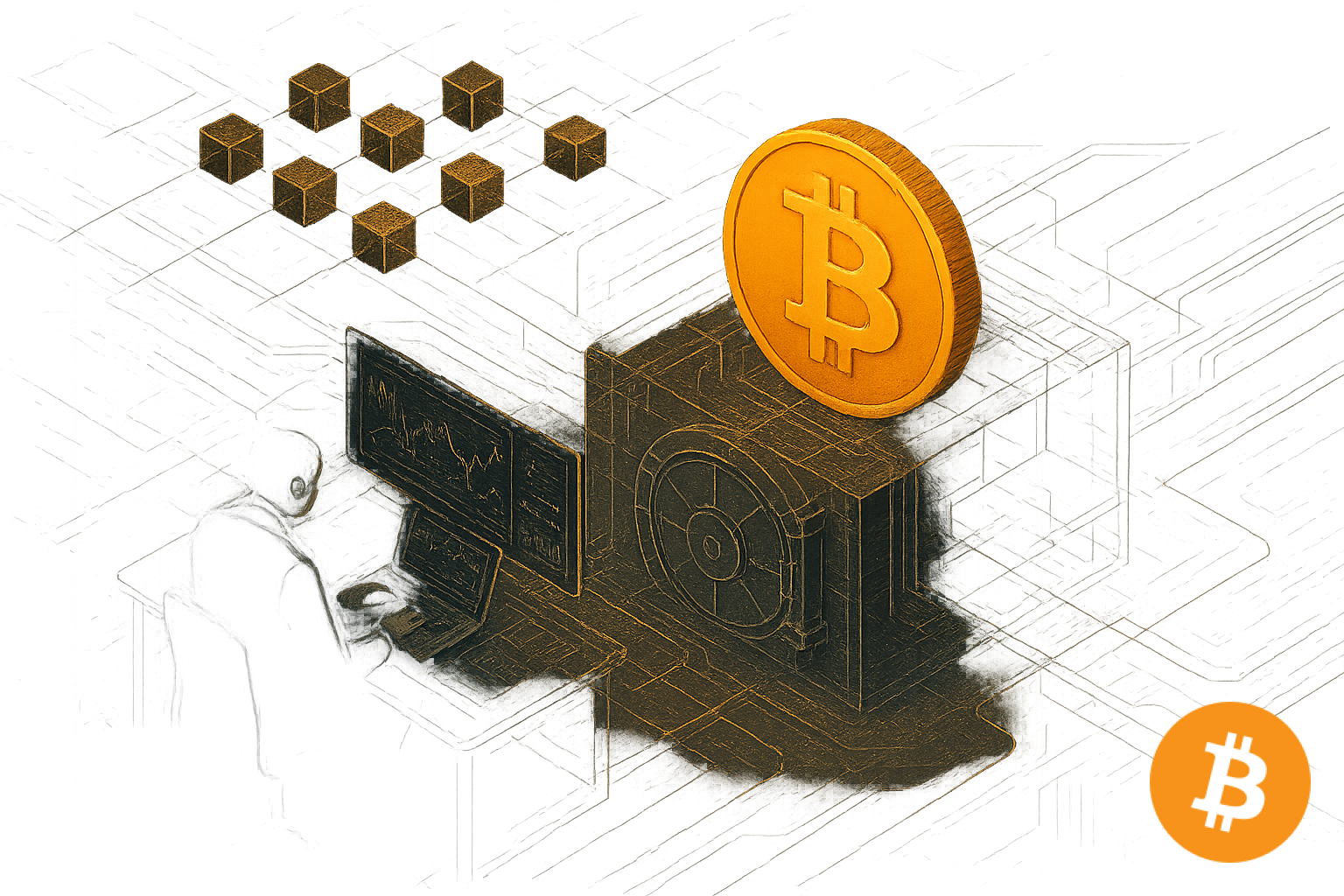
Bitcoin’s Long-Term Growth Amidst Market Volatility
Bitcoin, the pioneering force in the world of decentralized digital currency, continues to captivate the attention of investors and tech enthusiasts alike. Known for its revolutionary approach to financial independence, Bitcoin operates without the oversight of a central authority, providing a unique blend of digital scarcity and global accessibility. However, the journey of Bitcoin has been anything but smooth, characterized by significant market volatility and economic unpredictability.
Understanding Bitcoin’s Long-Term Growth Potential
Bitcoin’s long-term growth narrative is deeply intertwined with its foundational principles: decentralization, a fixed supply cap of 21 million coins, and its role as a hedge against inflation. As a store of value, Bitcoin offers protection from inflationary pressures that fiat currencies often face. This scarcity is a core driver of its perceived value, drawing parallels to precious metals like gold.
Historically, Bitcoin has yielded substantial returns, especially for those willing to endure its inherent volatility. According to recent analysis from Kraken, purchasing Bitcoin below its 200-week moving average has historically delivered over 100% in median returns. This highlights how strategic entry points can significantly impact investor outcomes in the long run.
The Role of Market Volatility
Market volatility is both a challenge and an opportunity for Bitcoin investors. As noted in recent reports, Bitcoin’s price movements can be significantly influenced by macroeconomic factors, such as interest rate signals from the bond market. For instance, a hawkish stance by the Federal Reserve can dampen Bitcoin’s short-term bullish prospects, as was observed recently when the Fed signaled concerns over inflation.
Despite these fluctuations, Bitcoin’s cyclical nature offers strategic investment opportunities. Understanding Bitcoin’s four-year halving cycle, which reduces the reward for mining new blocks, is crucial for investors. This cycle has historically led to bullish price actions post-halving, as the reduced supply of new Bitcoin increases scarcity.
Bitcoin Layer-2 Solutions: A Path to Scaling
To address scalability issues, the Bitcoin ecosystem has embraced Layer-2 solutions like the Lightning Network. These solutions aim to enhance transaction speeds and reduce costs, making Bitcoin more practical for everyday transactions. However, the recent shutdown of Botanix, a project aimed at programmable Bitcoin, raises questions about market demand for such innovations.
The slow adoption of Layer-2 solutions suggests that while the technology holds promise, the market currently favors Bitcoin’s traditional roles over programmable functionalities. It underscores the importance of focusing on what truly enhances Bitcoin’s utility as a decentralized currency.
Practical Implications for the Bitcoin Ecosystem
For long-term growth, Bitcoin must navigate the delicate balance between maintaining its core values and adapting to market demands. Investors should remain vigilant, understanding that while volatility poses risks, it also offers opportunities for substantial gains. Staying informed about macroeconomic indicators and Bitcoin’s cyclical patterns can help investors make more informed decisions.
In conclusion, Bitcoin’s potential as a decentralized digital currency remains strong, driven by its unique characteristics and historical performance. By leveraging strategic insights and embracing technological advancements, both investors and the broader Bitcoin ecosystem can continue to thrive amidst the ever-present market volatility.
Tags






Leave your comment
You must be logged in to post a comment.

Bitcoin’s Long-Term Growth Amidst Market Volatility
In the ever-evolving landscape of digital finance, Bitcoin stands as the beacon of decentralized digital money. Its journey from a niche concept to a mainstream financial asset has been marked by significant ups and downs. However, despite the volatility, Bitcoin’s long-term growth potential remains a topic of intense interest and speculation.
Bitcoin’s Market Performance: A Double-Edged Sword
The price of Bitcoin is notoriously volatile, with dramatic swings that can both entice and deter investors. Recent data highlights this characteristic. According to Glassnode, Bitcoin buyers have added over 250,000 BTC during price ranges between $59,000 and $67,000, indicating a robust accumulation phase. This data reflects a strong belief in Bitcoin’s future value, even as the market experiences turbulence.
Nevertheless, the market volatility is not without its challenges. For instance, as reported by CoinDesk, Bitcoin’s price fell below $66,000 amidst macroeconomic pressures such as SpaceX’s stock rally and geopolitical uncertainties involving Iran. These fluctuations underscore Bitcoin’s sensitivity to external economic factors, making it both an attractive and risky investment.
Institutional Interests: A Growth Catalyst
Institutional interest in Bitcoin is a critical factor in its long-term growth narrative. BlackRock’s recent launch of a new Bitcoin income fund, as reported by CoinDesk, exemplifies the growing demand for Bitcoin exposure among institutional investors. The fund aims to provide cash flow alongside Bitcoin exposure, offering a novel way for investors to capitalize on Bitcoin’s volatility.
Moreover, the introduction of Bitcoin exchange-traded funds (ETFs), such as those mentioned by Standard Chartered analyst Geoffrey Kendrick, is another significant development. These financial instruments make it easier for traditional investors to access Bitcoin, potentially driving further adoption and price stability over time.
The Technological Backbone: Reliability and Security
Bitcoin’s underlying technology is a critical component of its long-term viability. As a decentralized digital currency, Bitcoin operates without a central authority, providing a level of financial independence that is unparalleled in traditional finance. This decentralization is powered by blockchain technology, which ensures transparency, security, and immutability of transactions.
Additionally, Bitcoin’s fixed supply cap of 21 million coins introduces absolute digital scarcity, which is a hedge against inflation—a feature that is increasingly attractive in today’s uncertain economic climate. The Layer 2 scaling solutions, particularly the Lightning Network, further enhance Bitcoin’s utility by enabling faster and cheaper transactions, thus bolstering its position as a medium of exchange.
Future Prospects and Challenges
Looking ahead, the future of Bitcoin hinges on several factors. Regulatory developments remain a wildcard, with potential to either spur or stifle growth. However, the global nature of Bitcoin means that it can often circumvent regional regulatory constraints, maintaining its appeal as a borderless financial instrument.
Moreover, the market is closely watching technological advancements and adoption rates. As Bitcoin’s ecosystem continues to evolve, innovations such as smart contracts and further development of the Lightning Network could significantly enhance its functionality and adoption.
In conclusion, while Bitcoin’s journey is fraught with volatility, its long-term growth narrative remains compelling. The combination of institutional interest, technological robustness, and a unique position as a decentralized digital currency positions Bitcoin as a formidable player in the future of finance. Investors and tech enthusiasts alike should keep a keen eye on regulatory changes and technological developments that could shape Bitcoin’s trajectory in the coming years.
Tags


Leave your comment
You must be logged in to post a comment.

Bitcoin’s Long-Term Growth Amidst Market Volatility
Amidst the constant buzz around Bitcoin’s price movements, a quieter yet profound narrative is emerging. While headlines may focus on the immediate market dips, like the recent 2.8% decline noted by CoinDesk, there’s a broader story about Bitcoin’s long-term potential and its resilience in the face of volatility.
The Immediate Market Landscape
Recent market trends have seen Bitcoin experience notable fluctuations. According to CoinDesk, Bitcoin recently fell below $60,000, marking its weakest price since October 2024. This drop was part of a broader sell-off that affected not just cryptocurrencies but also traditional markets, with the Nasdaq 100 experiencing a 5% decline. Contributing factors included a robust jobs report that sparked rate hike fears and the liquidation of $1.6 billion in crypto positions.
Long-Term Growth Potential
Despite these short-term movements, many investors and analysts remain optimistic about Bitcoin’s long-term growth. Michael Saylor, a prominent figure in the crypto space, emphasizes the need for four distinct forces to drive Bitcoin’s success. These include institutional adoption, technological advancements, regulatory clarity, and a strong community of supporters. Such factors underscore the broader narrative that Bitcoin’s potential extends beyond immediate price fluctuations.
Institutional Adoption
Institutional adoption continues to be a significant driver of Bitcoin’s growth. Institutions bring not only capital but also legitimacy to the crypto market. The entry of major financial players has been a pivotal moment, suggesting confidence in Bitcoin’s future. As these institutions increase their holdings, Bitcoin’s position as a store of value akin to digital gold is reinforced.
Technological Advancements
Technological developments are crucial for Bitcoin’s scalability and security. Innovations such as the Lightning Network aim to address Bitcoin’s transaction speed and cost issues. As these technologies mature, they could enhance Bitcoin’s utility and adoption, making it more attractive for everyday transactions.
Market Volatility: A Double-Edged Sword
Bitcoin’s volatility is both a challenge and an opportunity. On one hand, it deters risk-averse investors who are wary of sharp price swings. On the other, volatility offers traders potential for significant returns. Moreover, periods of high volatility often precede substantial price rallies, as seen historically.
The Role of External Factors
External factors, such as macroeconomic conditions and technological developments in other sectors, also play a role in Bitcoin’s market dynamics. The recent AI boom, for instance, has been cited by experts like Mati Greenspan and Jameson Lopp as a factor draining capital from Bitcoin. Additionally, major events like potential initial public offerings (IPOs), such as the rumored SpaceX IPO, can shift investor focus temporarily.
The Path Forward
For Bitcoin to solidify its position, certain conditions must be met. Regulatory clarity will play a crucial role in providing a secure environment for both institutional and retail investors. Moreover, continued technological improvements will be necessary to maintain Bitcoin’s competitive edge.
While Bitcoin’s short-term price movements may capture headlines, its long-term growth story is built on fundamental factors that suggest resilience and potential for significant appreciation. The interplay of institutional adoption, technological advancements, and regulatory developments will shape Bitcoin’s trajectory in the years to come.
The market will closely watch these developments, with the confirmation of Bitcoin’s sustained growth potentially hinging on regulatory clarity and continued technological innovation. Conversely, any significant setbacks in these areas could weaken the bullish thesis.
Tags


Leave your comment
You must be logged in to post a comment.