 TRX
TRX DOGE
DOGE USDC
USDC XTZ
XTZ DASH
DASH TAO
TAO TRUMP
TRUMP XRP
XRP TONCOIN
 SOL
SOL ETH
ETH LINK
LINK BTC
BTC ANSEM
ANSEM ATTN
ATTN WLFI
WLFI




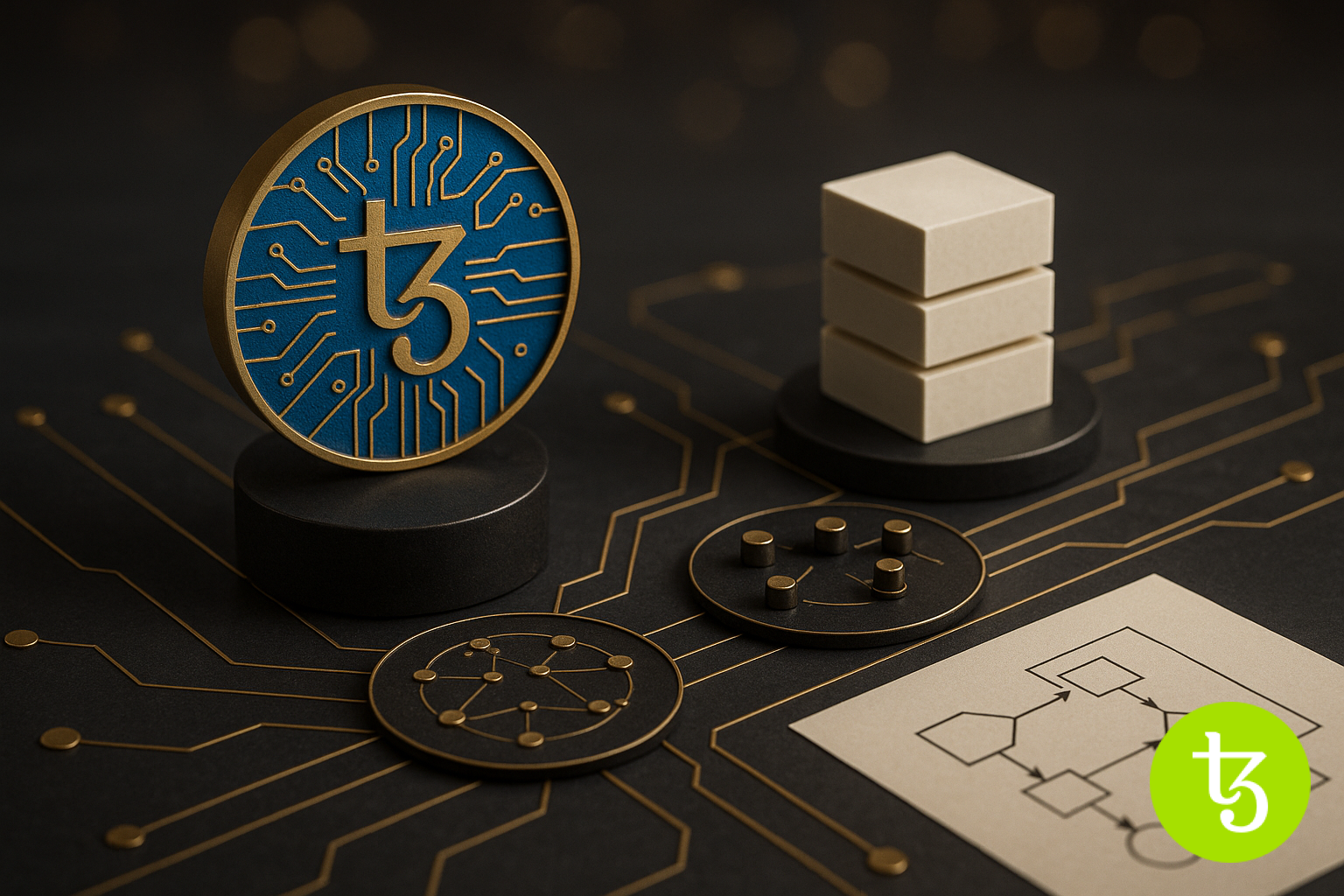
Tezos: Revolutionizing Blockchain with Liquid Proof of Stake

The blockchain ecosystem has witnessed numerous innovations, but few have managed to balance the intricate dance of decentralization, scalability, and governance as effectively as Tezos. Originally proposed in 2014 and launched in 2018, Tezos has carved a niche for itself with its unique Liquid Proof of Stake (LPoS) consensus mechanism, smart contracts, and governance model. This article delves into the multifaceted world of Tezos, exploring its core features, challenges, and the controversies surrounding its founders.
Understanding Tezos and Its Liquid Proof of Stake
Tezos operates on a Liquid Proof of Stake (LPoS) model, a variant of the Proof of Stake (PoS) consensus mechanism. Unlike traditional PoS, where validators are chosen based on the number of tokens held, LPoS allows token holders to delegate their staking rights without transferring ownership. This democratizes the staking process, enabling broader participation and enhancing network security. Stakeholders, or ‘bakers’, play a pivotal role, validating transactions and maintaining the blockchain’s integrity while earning rewards in Tez (XTZ), the native currency.
Smart Contracts and On-chain Governance
Tezos’ smart contract functionality is another key highlight. It employs Michelson, a language designed with formal verification in mind, ensuring that smart contracts are secure and bug-free. This focus on code security aligns with Tezos’ overarching philosophy of reducing vulnerabilities and fostering trust.
Furthermore, Tezos stands out through its on-chain governance model, which empowers stakeholders to propose and vote on protocol upgrades. This self-amendment feature ensures that Tezos can adapt to changing technological landscapes without hard forks, a common issue in other blockchain networks.
Tezos Foundation and Ecosystem Growth
Central to Tezos’ growth is the Tezos Foundation, which supports development initiatives and promotes ecosystem expansion. With tools designed for high scalability, Tezos has embraced layer-2 solutions such as Smart Rollups, allowing for increased data processing and logic execution. This positions Tezos as a formidable player in the decentralized finance (DeFi) and NFT sectors, providing robust infrastructure for applications.
Controversies: Founders and Infighting
Despite its technical prowess, Tezos has not been free from controversy. Founders Arthur and Kathleen Breitman faced legal challenges shortly after Tezos’ launch, primarily concerning the ICO and governance disputes. Infighting within the Tezos Foundation further complicated matters, leading to a temporary loss of investor confidence.
However, the platform’s resilience and ability to navigate these challenges have reinforced its position in the market. The community’s commitment to transparency and continuous improvement has been pivotal in overcoming early setbacks.
Why Tezos Matters Today
In an age where blockchain technology is reshaping industries, Tezos offers a distinctive approach that prioritizes security, flexibility, and community involvement. Its LPoS model not only secures the network but also democratizes participation, setting a precedent for future blockchain innovations.
As the blockchain landscape evolves, Tezos’ capacity for self-amendment and its robust governance model position it as a leader in sustainable blockchain development. For investors and developers alike, Tezos represents a blend of technical excellence and community-driven progress.
The Unanswered Question
While Tezos has addressed many of its initial challenges, the question remains: Can it maintain its momentum and continue to innovate amidst rising competition and evolving technological demands? As the blockchain world watches, Tezos’ journey is one of potential and promise, with its future hinging on its ability to adapt and lead.
Reviews
User Score
Rate This
Sharing
Tags






Tezos: Revolutionizing Blockchain with Liquid Proof of Stake
Tezos (XTZ) has carved a unique niche in the blockchain industry, primarily due to its innovative Liquid Proof of Stake (LPoS) mechanism. First proposed in 2014 and launched in 2018, Tezos has consistently evolved, offering robust solutions in smart contracts, governance, and non-fungible tokens (NFTs). But what truly sets it apart from other blockchain platforms?
The Power of Liquid Proof of Stake
Tezos’ LPoS model is a key differentiator. Unlike traditional Proof of Stake (PoS) systems where the staking process is often rigid and limited to a small group of validators, LPoS democratizes the staking process. This system allows any stakeholder to participate in the network’s consensus process, either directly or through delegation, ensuring a more inclusive and decentralized network.
Moreover, participants are rewarded for securing the network, which not only incentivizes involvement but also enhances security. This mechanism has led to a vibrant and active community, a critical component of Tezos’ ongoing success.
Smart Contracts and Formal Verification
Tezos is renowned for its focus on security, particularly in smart contracts. The platform’s use of formal verification, a process that mathematically proves the correctness of smart contracts, sets a high standard in the industry. This reduces the risk of bugs and vulnerabilities, offering peace of mind to developers and users alike.
The upcoming Tezos 2.0 aims to further enhance these capabilities, improving scalability through layer 2 solutions and supporting mainstream programming languages such as JavaScript and Python. This not only broadens the developer base but also accelerates the adoption of Tezos-based applications.
Governance and Evolution Through Self-Amendment
Tezos’ on-chain governance is another standout feature. Unlike many other blockchains that require hard forks to implement changes, Tezos can evolve through self-amendment. This allows stakeholders to vote on proposed upgrades, ensuring that the network can adapt to new challenges and opportunities without contentious splits.
This governance model has enabled Tezos to implement numerous upgrades seamlessly, reinforcing its reputation for technical excellence and flexibility.
NFTs and Tezos’ Ecosystem Expansion
In the realm of NFTs, Tezos has made significant strides. Its energy-efficient blockchain is attractive to artists and creators seeking sustainable alternatives. The platform has hosted several high-profile NFT projects, further cementing its position as a leader in this space.
Additionally, Tezos’ ecosystem continues to expand with tools that enhance scalability and functionality. Smart Rollups, for instance, allow for large-scale logic execution and data handling, making Tezos an attractive platform for complex applications.
Challenges and Controversies
Despite its successes, Tezos has faced challenges, particularly concerning its founders, Arthur and Kathleen Breitman. Legal and regulatory issues, coupled with governance disputes, have occasionally overshadowed the platform’s achievements. These controversies highlight the ongoing risks and complexities inherent in managing a decentralized ecosystem.
Furthermore, internal infighting and competition from technologically advanced rivals pose additional challenges. However, the resilient Tezos community and its foundational strengths continue to drive the platform forward.
The Road Ahead for Tezos
As Tezos continues to innovate, the unanswered question remains: can it maintain its competitive edge amid increasing competition and internal challenges? The platform’s focus on security, governance, and sustainability positions it well, but the evolving blockchain landscape requires constant adaptation.
For sophisticated readers tracking Tezos, the key is to watch how effectively the platform leverages its unique features to drive adoption and address its challenges. The ability to navigate these complexities will determine Tezos’ long-term success in the blockchain ecosystem.
Tags


Leave your comment
You must be logged in to post a comment.
Tezos: Revolutionizing Blockchain with Liquid Proof of Stake
Tezos, a blockchain platform known for its focus on code security, on-chain governance, and decentralization, is gaining momentum in the cryptocurrency world. Central to its appeal is its unique Liquid Proof of Stake (LPoS) consensus mechanism, which empowers stakeholders to participate actively in the network’s governance and security. Unlike traditional Proof of Stake systems, LPoS allows token holders to delegate their validation rights without transferring ownership. This flexibility fosters a more democratic and decentralized ecosystem.
Baking: The Heart of Tezos’ Consensus
Tezos’ consensus mechanism revolves around the concept of baking. In this context, bakers are akin to miners in a Proof of Work system. They validate transactions and add new blocks to the blockchain. The system rewards bakers with newly minted Tez (XTZ) tokens, offering an incentive to maintain network security and integrity. Crucially, any Tezos holder can become a baker by staking a minimum amount of XTZ, or they can delegate their tokens to a baker for rewards, democratizing the process.
Governance and Smart Contracts: A Self-Amending Ledger
Tezos distinguishes itself with its robust on-chain governance, enabling continuous protocol upgrades without hard forks. This self-amending feature allows stakeholders to vote on proposed changes, ensuring that the system evolves in alignment with community interests. For developers, this means a stable environment for building smart contracts, which are essential for decentralized applications (dApps).
Tezos’ smart contracts are written in Michelson, a language designed for formal verification. This ensures high-security standards, a critical factor for developers building applications that handle substantial financial transactions.
Navigating Challenges: The Human Element
Despite its technical prowess, Tezos has faced its share of challenges. The project’s founders, Arthur and Kathleen Breitman, were embroiled in legal disputes that initially cast a shadow over the foundation. However, the community’s resilience and commitment to decentralization have been pivotal in overcoming these hurdles.
Infighting and governance disputes occasionally surface, reflecting the complexities of managing a decentralized ecosystem. Nonetheless, these challenges have spurred a more robust governance model, with clearer guidelines and a more engaged community.
Non-Fungible Tokens (NFTs) and Beyond
Tezos is also making significant strides in the NFT space. Its energy-efficient blockchain has become a preferred choice for artists and creators seeking sustainable minting options. Platforms like Hic et Nunc have emerged, leveraging Tezos’ capabilities to offer a vibrant marketplace for digital art.
Moreover, Tezos’ layer 2 solutions, such as Smart Rollups, provide scalability, enabling high-throughput applications without compromising security. This positions Tezos as a formidable player in the evolving blockchain landscape.
Conclusion: The Road Ahead for Tezos
Tezos’ innovative approach to blockchain technology, characterized by its Liquid Proof of Stake mechanism and on-chain governance, sets it apart in a crowded field. While challenges remain, the platform’s adaptability and focus on community-driven development continue to drive its evolution.
For Tezos to solidify its position, ongoing engagement with its community and continued technological advancements are crucial. The platform’s success hinges on its ability to navigate internal dynamics while capitalizing on its technical strengths. As Tezos moves forward, its commitment to decentralization and innovation will likely dictate its trajectory in the blockchain realm.
Tags


Leave your comment
You must be logged in to post a comment.